 FactsLook
9 Archaeological Discoveries That Completely Rewrote History
Göbekli Tepe: A 12,000-Year-Old Calendar That Rewrites Prehistory
Religion may have come before farming — not after it. That's the uncomfortable implication of a site in southeastern Turkey that archaeologists still can't fully explain.
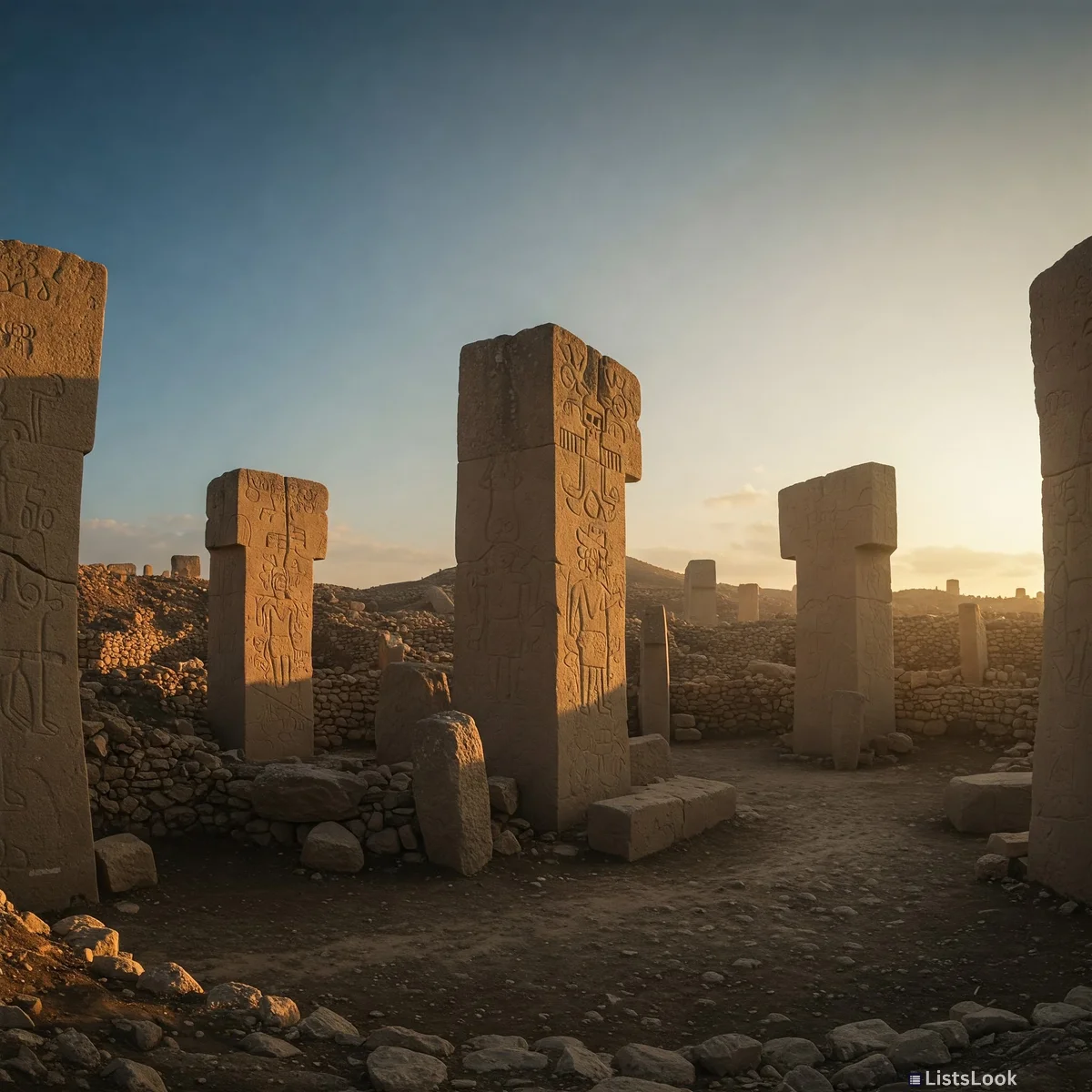
In 1994, Turkish workers building a reservoir near Şanlıurfa stumbled on something that stopped them cold: a ring of massive T-shaped pillars, carved with animals, buried under a hill that had been deliberately backfilled and left untouched for roughly 10,000 years. Reuters The site predates Stonehenge by about 6,000 years. The pillars stand up to 5.5 meters tall and weigh several tons each.
The people who built it were hunter-gatherers — not settled farmers. That breaks a core assumption historians held for decades: that complex ritual and monumental architecture required agriculture first. In 2024, researchers identified what may be the world's oldest calendar, carved into a pillar, tracking lunar and solar cycles across seasons. The New York Times In November 2025, excavations at Göbekli Tepe and the nearby site of Karahantepe revealed 30 new Neolithic artifacts — including the first known T-shaped pillar carved with a human face. Reuters
The lesson isn't just about the past. It's about what we assume is necessary for human civilization — and how often we're wrong. Göbekli Tepe proves that organized religion, monumental architecture, and sophisticated astronomy existed before anyone planted a crop. The ancient myths and ritual systems that likely drove this site are part of a much longer story than textbooks once suggested.
Ötzi: A Murder Mystery in the Alps
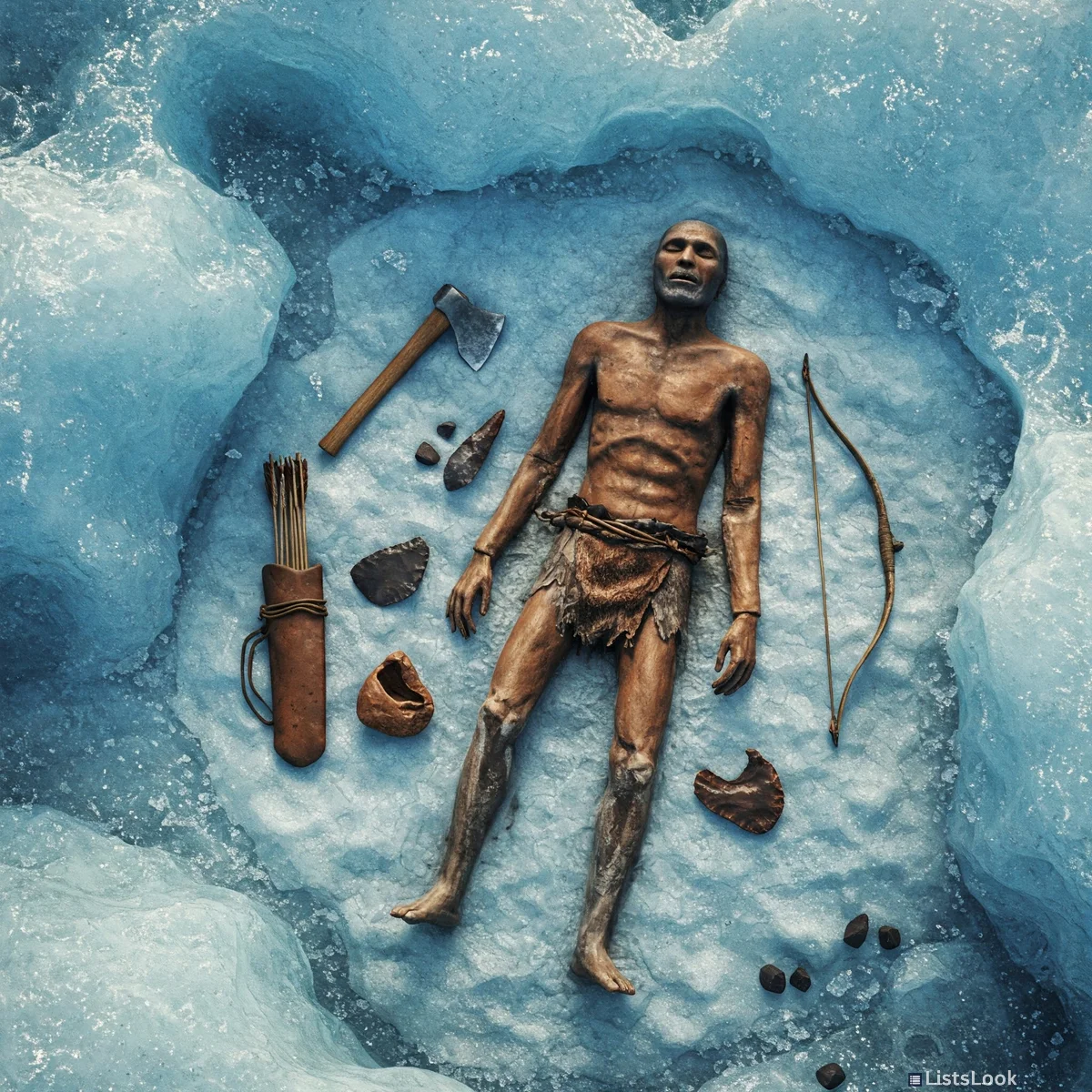
He died from an arrow wound to his left shoulder, spent 5,000 years frozen under ice, and emerged in 1991 with enough forensic detail to reconstruct his final hours — and possibly the identity of the archer who killed him.
Ötzi, the Iceman, died around 3300 BCE in the Ötztal Alps on the border between modern Austria and Italy. His last meal was ibex meat and wheat bran, eaten about 30 minutes before he bled out. Analysis found he carried the oldest known evidence of Lyme disease and had a genetic mutation causing male pattern baldness — making him the first documented case of both. PMC / National Institutes of Health
Forensic 3D reconstructions in 2025 suggest his arrow wound and other injuries tell a more complicated story than a simple ambush — he may have been actively hunted. Springer forensic research He carried a copper axe, a bow, and arrows — tools of a high-altitude herder or guide, not a farmer. His 61 tattoos weren't decorative; evidence suggests they were therapeutic, possibly related to forensic archaeology and what our bodies can tell us centuries later about how humans lived and died under extreme conditions.
Dead Sea Scrolls: They're Older Than We Thought
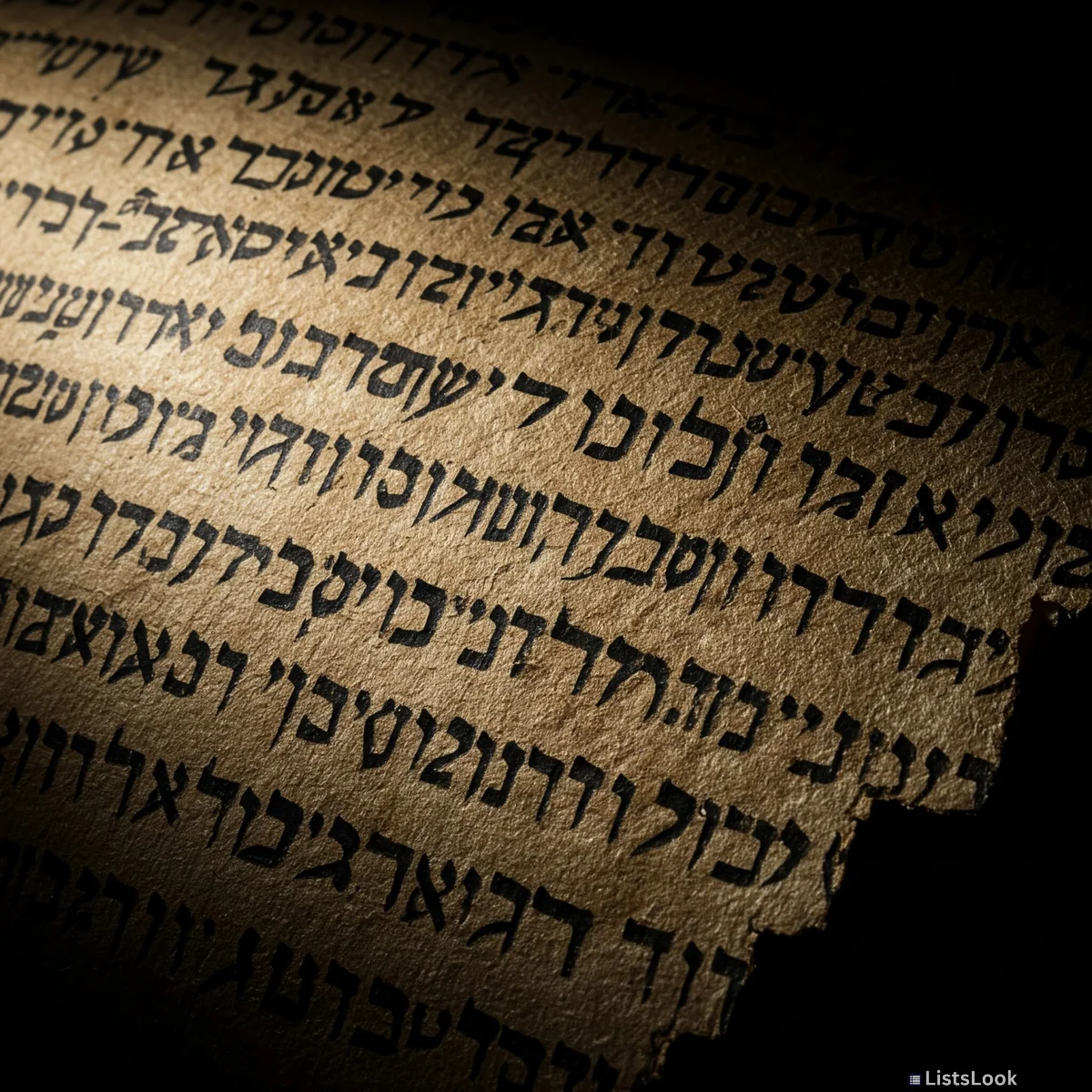
Before the Dead Sea Scrolls, scholars debated how Hebrew Bible texts evolved. Then Bedouin shepherds found the first scrolls in Qumran caves in 1947 — and the debate changed completely.
The scrolls contained the oldest known copies of Hebrew Bible texts, revealing a diversity of Jewish thought during the Second Temple period that shocked experts. They were hidden around 70 CE, likely during the Jewish revolt against Rome, probably copied in haste and cached before the Romans arrived. Among the most mysterious: a Copper Scroll listing what appears to be a treasure map — though no one has ever found the gold. GB News
But here's what's new: AI analysis in 2025 pushed the dating back by up to 100 years for some fragments, revising the timeline of early Jewish religious development. CNN The community that wrote and hid these scrolls — whoever they were — was active earlier than historians assumed. The Ashura and Muharram traditions that still shape religious calendars today have roots in this same era of intense scribal activity and political upheaval.
Tutankhamun: A Pharaoh with Malaria and a Cleft Palate
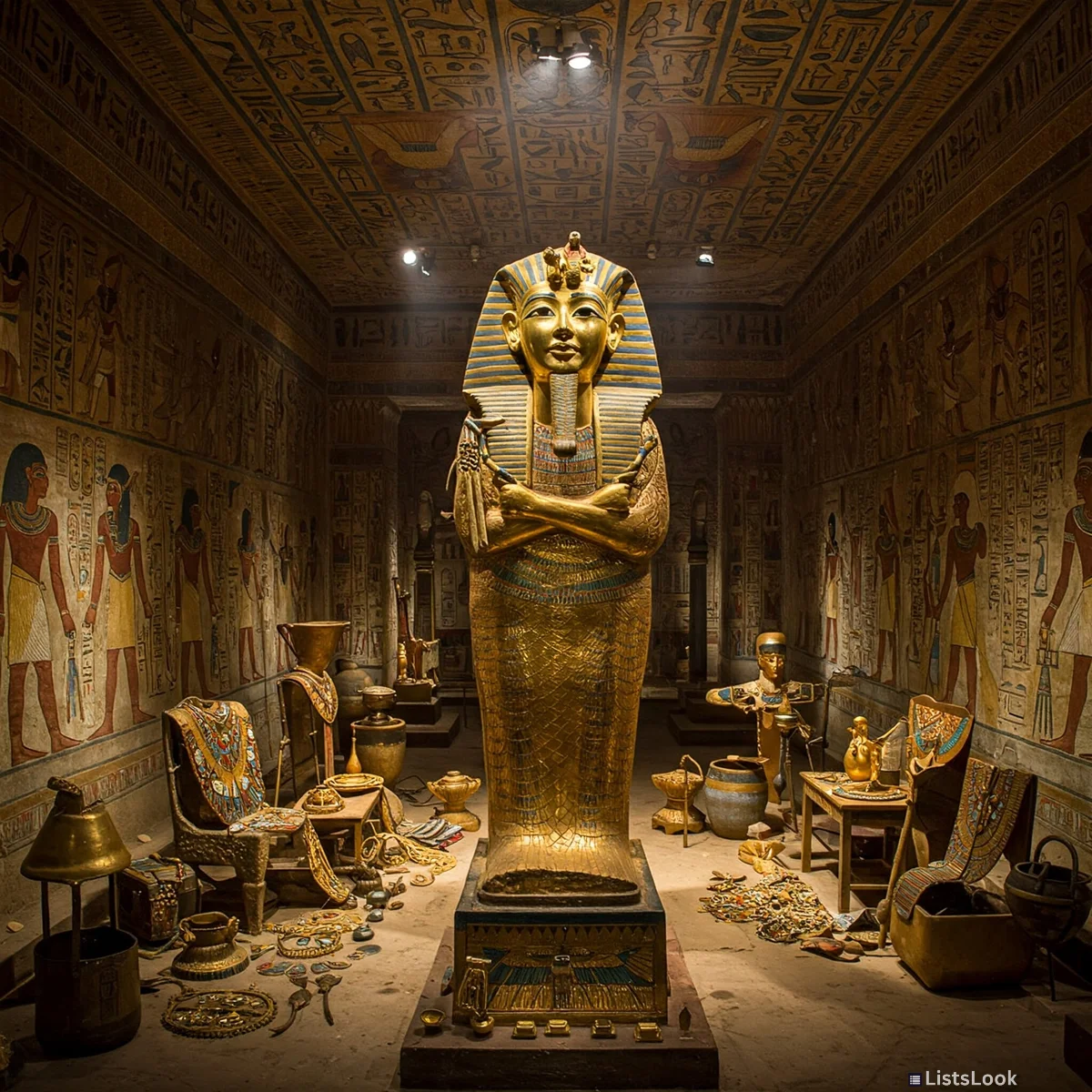
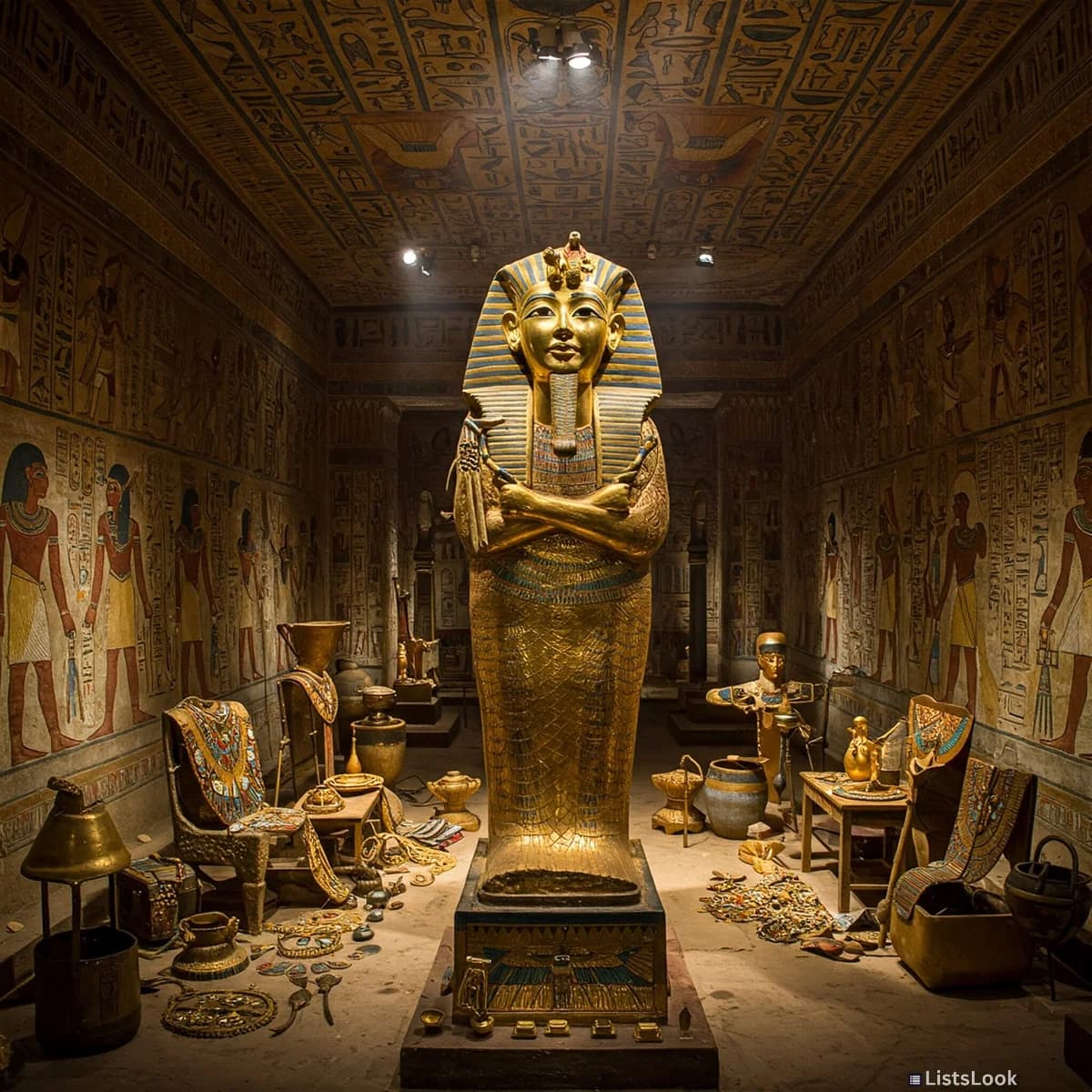
When Howard Carter opened Tutankhamun's tomb in 1922, the world fixated on the gold. But the real story turned out to be in the mummy — and in the DNA.
CT scans and genetic analysis revealed Tutankhamun suffered from a cleft palate, giving him a speech impediment. He also had the malaria parasite in his system — a combination that would have made a walking impairment from Kohler disease even more debilitating. Jerusalem Post A 2024 analysis of his burial mask raised new questions: the mask's inner face may have been cast for a woman originally, then modified for the young king. Phys.org
He died around age 19 — not from a chariot accident, as once speculated, but from a combination of genetic conditions, malaria, and a leg fracture that became infected. The tomb was sealed quickly, probably because Tutankhamun died unexpectedly, leaving officials to rush burial arrangements.
The ancient Egyptian religious beliefs around death that shaped his burial were intensely practical: get the king underground before the wrong spirits noticed.
Terracotta Army: China's First Emperor Still Guards His Secrets
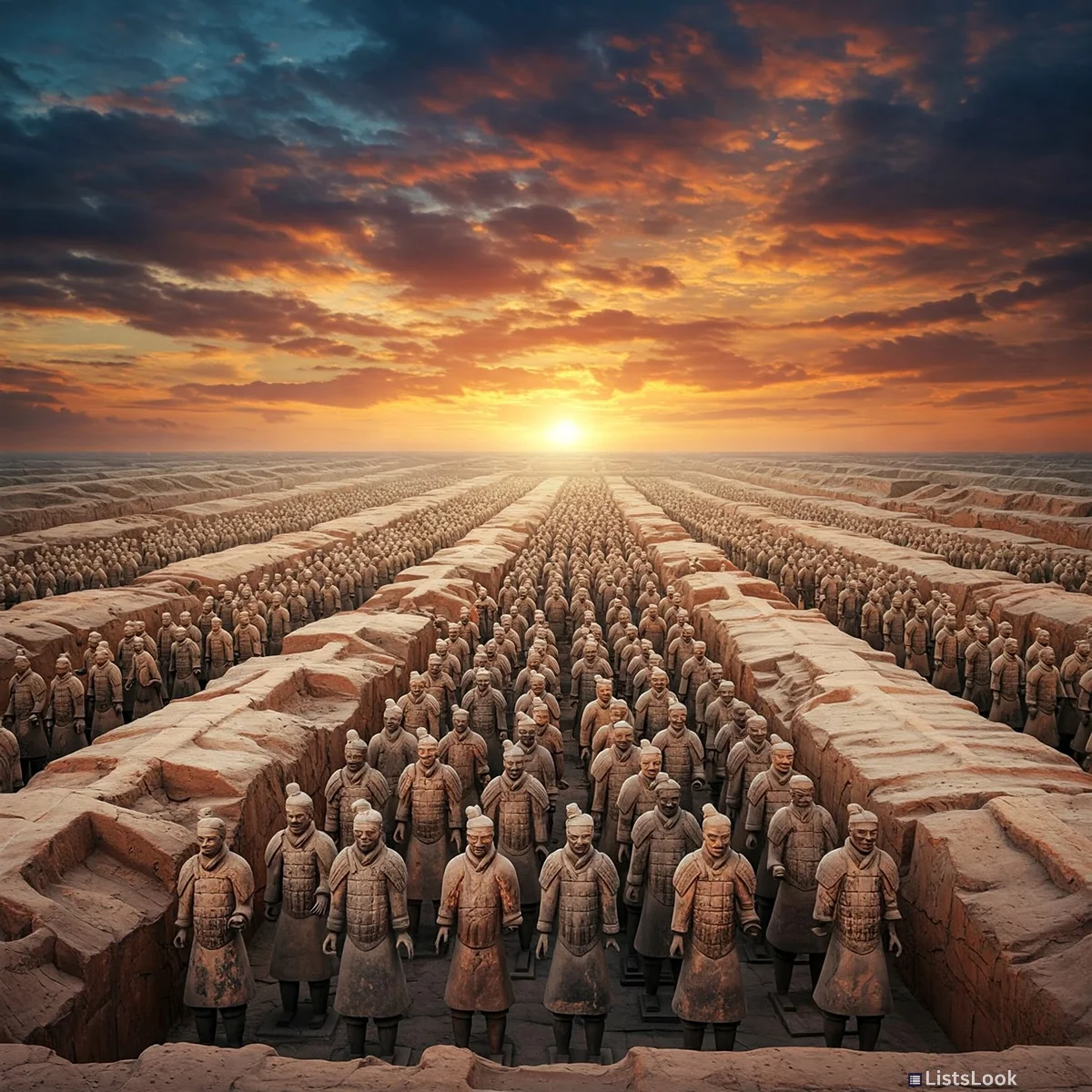
Discovered by farmers drilling a well in 1974, the Terracotta Army now spans three pits covering 22,000 square meters with an estimated 8,000 soldiers, 130 chariots, and 670 horses. Each face is unique — likely modeled on actual soldiers. Smithsonian Magazine
In 2024, archaeologists unearthed a high-ranking commander figure — one of the rarest finds at the site. HeritageDaily
The real mystery sits under a grass-covered mound a short distance away: Qin Shi Huang's actual tomb. Ancient texts describe rivers of mercury and model constellations inside. Ground-penetrating radar suggests real liquid mercury deposits beneath the mound — and no one's allowed to dig it open. Some think opening it now would destroy everything. Others point out the mercury levels would be lethal.
The ancient Chinese beliefs about the afterlife that drove the emperor's obsession with immortality are well documented. So Qin Shi Huang waits, in the dark, under a mountain.
Pompeii: A City Caught in Its Final Hours
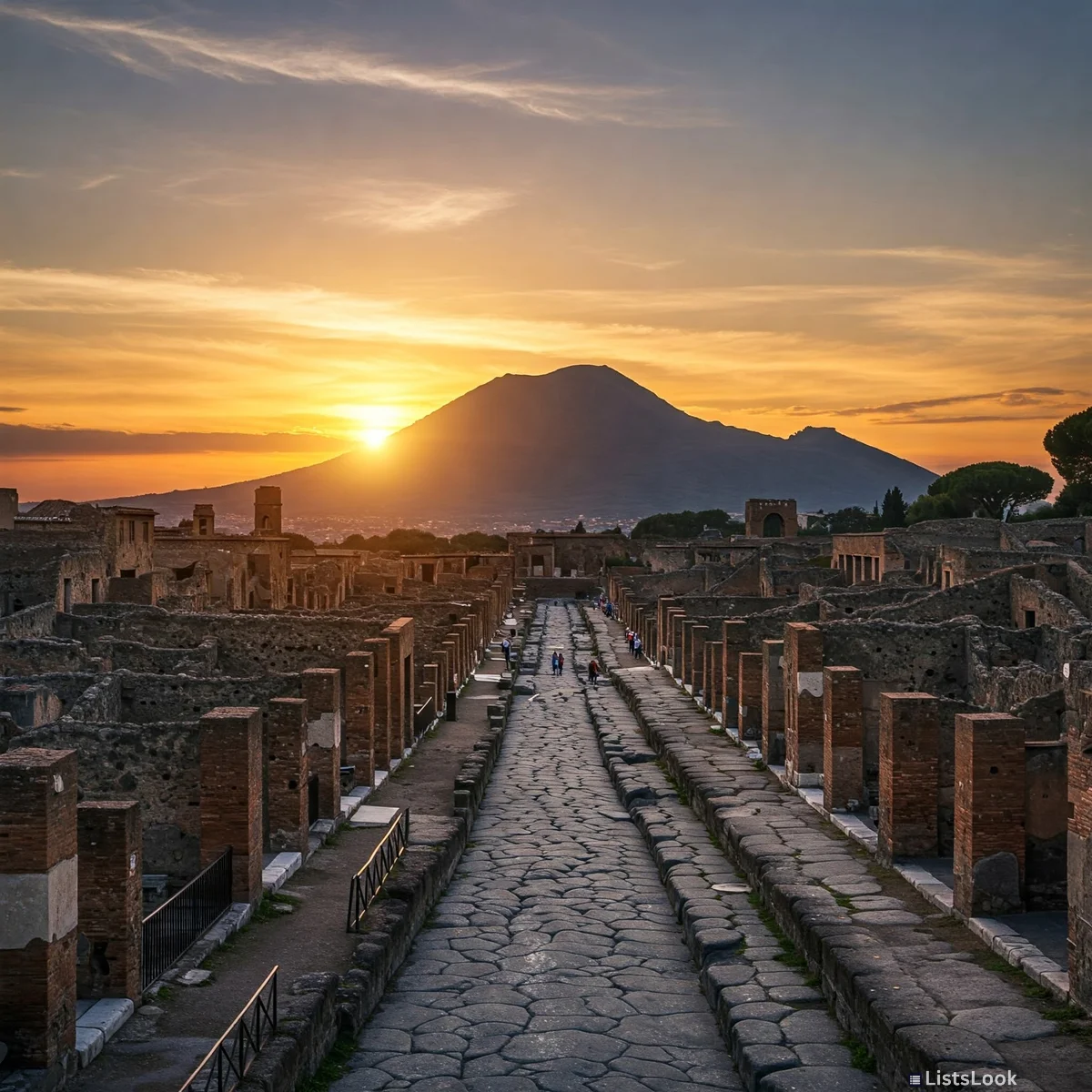
Mount Vesuvius erupted in 79 CE and buried Pompeii under volcanic ash in 48 hours. What it preserved was a slice of Roman life so detailed that historians now use it as a primary source — not just a decoration.
In 2024, archaeologists uncovered an entire previously unknown city block, including a bakery, laundry, and a private spa, along with the skeletal remains of a man and a woman with jewelry and coins. BBC In another pit, researchers found evidence of a family desperately shoveling ash to escape rising lapilli — small volcanic stones burying their home. They failed. But their attempt reveals something textbooks rarely mention: the people of Pompeii weren't passive victims. They tried to survive. Archaeology Magazine
The city gives us ordinary Roman life in a way no other site can. We know what they ate, what they wrote on walls (political graffiti, insults, love notes), and how they organized their homes. The pagan celebrations that evolved into traditions we still observe today have Roman roots visible in Pompeii's streets — Roman history and civilization shaped far more of modern life than most people realize.
Rosetta Stone: A Teen Polymath vs. a 1,400-Year-Old Mystery
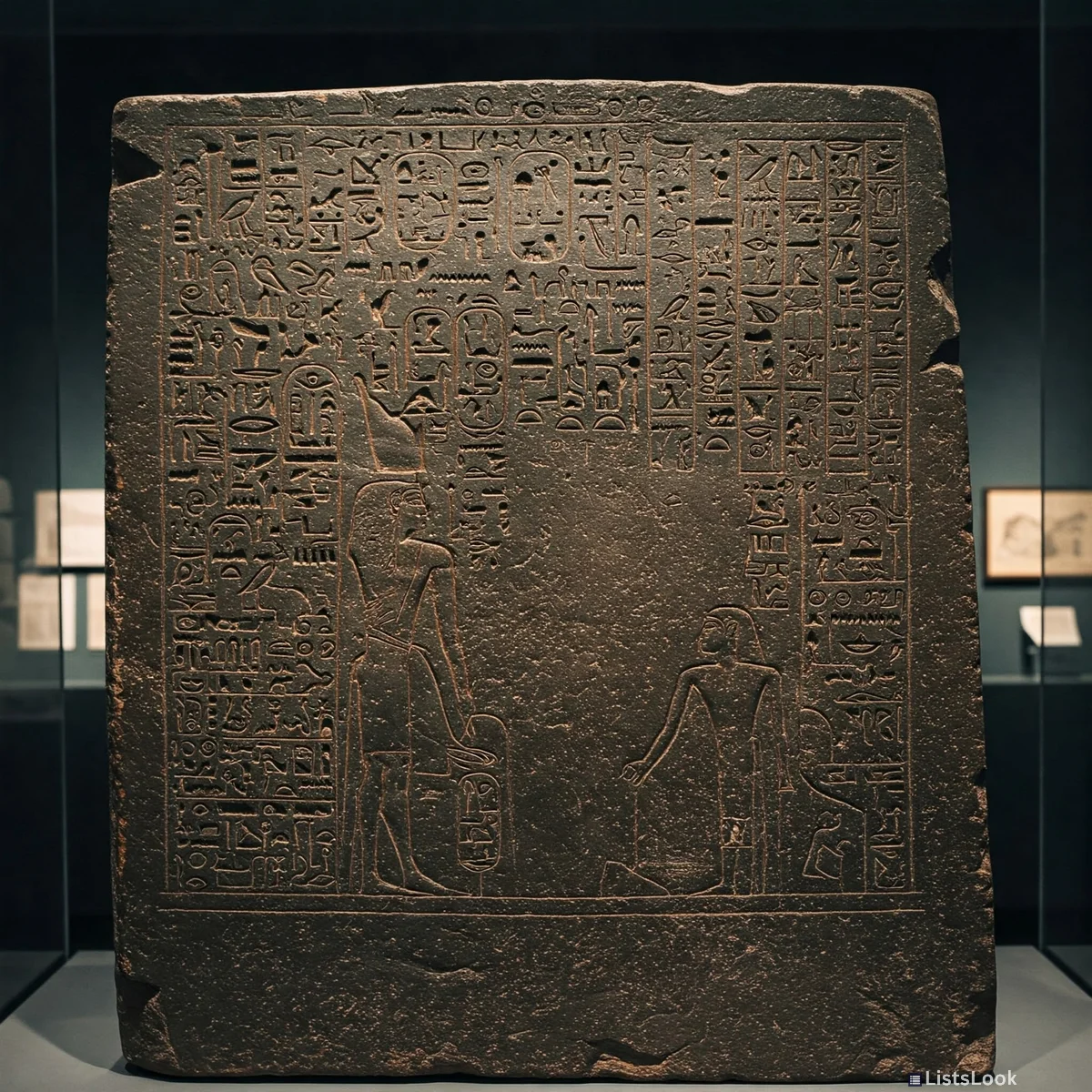
French soldiers found the Rosetta Stone in 1799 while fortifying a fort near Rosetta, Egypt. It carried the same decree in three scripts: hieroglyphics, demotic, and Ancient Greek. That triplicate key unlocked a language that had been unreadable for 1,400 years.
The decipherment came from a rivalry. Thomas Young identified 13 alphabetic characters in 1819. But Frenchman Jean-François Champollion — who had taught himself six ancient languages by age 12 — took it further. In 1822, he used royal names written in cartouches to prove hieroglyphics worked like a combination of alphabet letters and picture-symbols. He announced his breakthrough on September 27, 1822, then died of a stroke at 41, having never finished his great work on Egypt. TheCollector
Without the stone, we couldn't read the inscriptions on the pyramids. We couldn't understand the ancient Egyptian religious practices that shaped an entire civilization. We'd have statues and temples with no way to ask them questions.
Cahokia: America's Lost Megacity
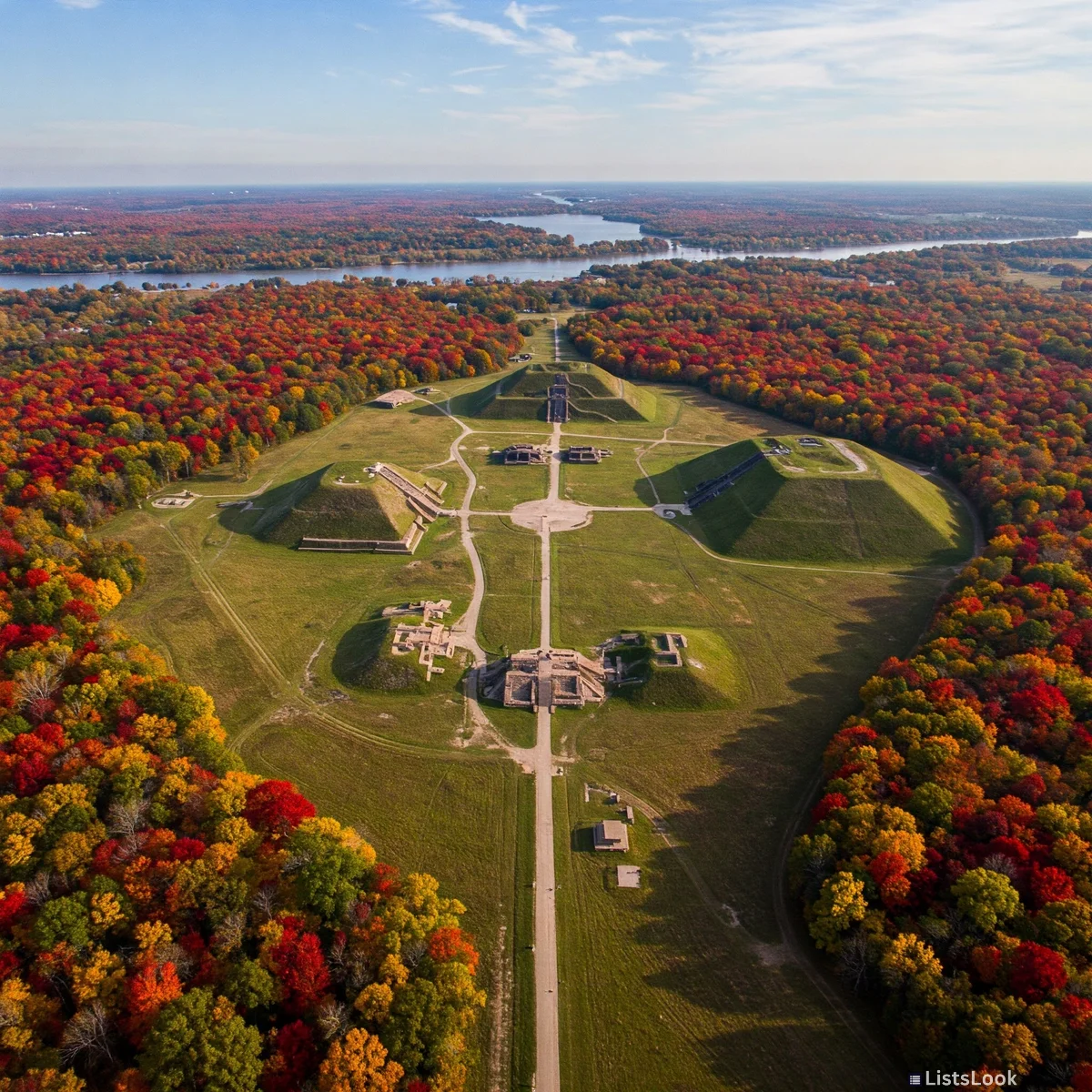
Cahokia, near present-day Collinsville, Illinois, was the largest pre-Columbian city north of Mexico — with up to 50,000 residents at its peak around 1050–1200 CE. Monks Mound, its centerpiece, is the largest prehistoric earthwork in North America: a platform mound 30 meters high covering 5.8 hectares, roughly the footprint of 40 football fields.
The standard story says the city died from drought. New soil research in 2024 says that's probably wrong — the crops survived climate stress, so starvation isn't the explanation. Washington University in St. Louis and Archaeology Magazine
What happened instead? Researchers now think social inequality, internal conflict, and resource competition played a bigger role. The city built 120 mounds over centuries, then abandoned them in decades. Whatever broke Cahokia wasn't slow. It was fast and structural.
The site challenges the narrative that pre-Columbian societies were simple or static. Before Columbus sailed, an American city rivaled medieval Europe's capitals in size and complexity.
L'Anse aux Meadows: Vikings in North America — Exactly 1,021 Years Ago
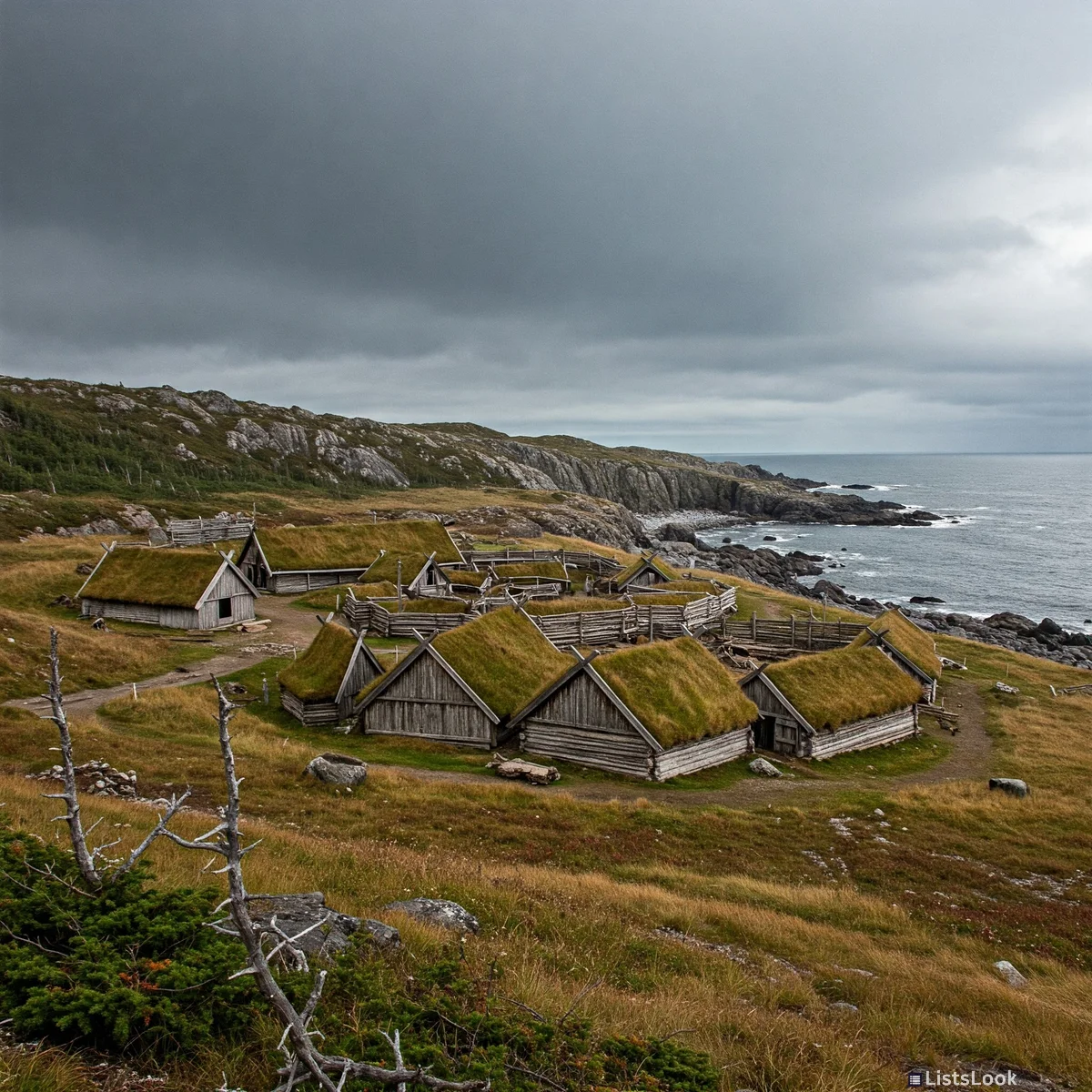
Norwegian explorer Leif Erikson landed in Newfoundland around 1000 CE — or so the sagas said. For decades, nobody believed it. Then in 1960, a Norwegian explorer found the smoking gun: sod-covered mounds on a grassy headland.
L'Anse aux Meadows, on Newfoundland's tip, is the only confirmed Norse site in North America — now a UNESCO World Heritage Site. Recent peat bog excavations in 2018–2019 expanded what we know about how long they stayed and what they built. Parks Canada and UNESCO
In 2021, researchers used tree-ring dating to confirm the Vikings were there in exactly 1021 CE — precisely 1,000 years before the study was published. Nature and Smithsonian Magazine
The settlement was small — three longhouses, a workshop, a storage area — and probably lasted 3–13 years. They came for timber, fished, and explored south before returning to Greenland with bad news: the land was not worth colonizing. The Vikings' seafaring culture and Norse mythology shaped why they came and what they took away. They left before the Black Death reshaped Europe a few centuries later.
Common Questions About Archaeological Discoveries
How do archaeologists date their discoveries?
They use multiple methods. Radiocarbon dating works on organic material like wood, bone, and charcoal, reliable up to about 50,000 years old. Tree-ring dating (dendrochronology) provides precise dates when wood samples match known chronological sequences. Thermoluminescence dating works on ceramics and fired materials. For more recent periods, historians compare written records and stratigraphic layers — the sequences of soil deposits that accumulate over time.
What is the most recent groundbreaking archaeological discovery?
In November 2025, excavations at Göbekli Tepe and Karahantepe in Turkey revealed 30 new Neolithic artifacts, including the first known T-shaped pillar carved with a human face. Earlier in 2024, AI-assisted analysis of Dead Sea Scrolls fragments pushed their dating back by up to a century, revising the timeline of early Jewish religious development. Archaeologists also uncovered a previously unknown block of Pompeii, including a private spa, bakery, and two human skeletons with jewelry.
Why do archaeological discoveries keep rewriting history?
Written history is filtered through who wrote it, when, and why. Archaeology finds what people left behind — not what they wanted you to know. A tomb sealed in a hurry tells you something different than a royal chronicle. Each discovery adds data points that historians compare against existing narratives, and sometimes those narratives don't hold.