 FactsLook
Ancient Egyptians Used Crocodile Dung for Birth Control - Here’s What’s Next in 2026
Ancient Egyptians Used Crocodile Dung as Birth Control (1850 BC)
Before rubber and hormones, ancient Egyptians were already improvising. The Kahun Papyrus, dated to 1850 BC, documents a birth control paste made from crocodile dung, honey, and sodium carbonate — inserted into the vagina as a primitive pessary. Museum of Contraception and Abortion
The alkaline environment created by the sodium carbonate likely gave it some sperm-blocking properties, though calling it reliable would be generous. What it certainly did: make ancient Egyptians extremely resourceful. And possibly very uncomfortable.
Ancient Romans Used Animal Bladders as Condoms
Goat bladders weren't just for holding wine. Romans strung them over the penis as sheath-style condoms — primarily to prevent sexually transmitted infections rather than pregnancy. History.com
The anatomical accuracy was... flexible. But when your alternative was dying of syphilis, a loose bladder starts to look like progress.
The First Condom Named After a King
King Charles II of England gets credit — allegedly — for popularizing the 'modern' condom in the 1700s. The story goes a royal physician developed a lamb intestine sheath, and the king found it... useful. Wikipedia: History of Condoms
Lamb intestine condoms were usable, but expensive and reusable. You'd rinse, dry, and hope for the best. Romantic, right?
Charles Goodyear Invented the Rubber Condom in 1844
Vulcanized rubber changed everything. Goodyear's process made condoms affordable and disposable — a massive leap from linen and animal intestine. The timing: just before the sexual revolution would make this invention culturally explosive.
Early rubber condoms were thick by modern standards (0.038mm vs today's ~0.06mm for standard latex), but they worked. And unlike lamb intestine, they didn't come with a expiry date.
The First Female Birth Control Pill Was Approved May 9, 1960
Enovid, developed by Gregory Pincus and funded by Katharine Dexter McCormick, received FDA approval on May 9, 1960 — not 1961 as many sources claim. The 1960 date is documented in the New England Journal of Medicine.
The pill didn't just prevent pregnancy. It restarted women's place in society. By 1965, 40% of married American women under 25 were on it.
Birth Control Pills Lower Ovarian Cancer Risk by Up to 50%
Research published in The Lancet found that 10 years of oral contraceptive use reduces ovarian cancer risk by 50%. The longer you use it, the more protection you accumulate. This is one of the best-kept health secrets in women's medicine.
The protective effect persists for decades after stopping the pill.
The IUD Survived the 1970s Scandal and Came Back Stronger
The Dalkon Shield (1970s) caused thousands of injuries and infections — leading to 200,000 lawsuits. Modern IUDs bear zero resemblance to it. CDC contraception guidelines
Today's hormonal IUDs (Mirena, Liletta, Kyleena) release localized levonorgestrel, causing minimal systemic side effects. Typical-use failure rate: less than 1%. Compare that to the Dalkon Shield's catastrophic design flaw.
You Can Track Your Cycle With Basal Body Temperature — But It's Tricky
Fertility Awareness-Based Methods (FABMs) require measuring your temperature first thing in the morning, before talking, eating, or even sitting up. The thermal shift after ovulation is subtle — about 0.2–0.5°C — so a digital thermometer matters.
Perfect use: 99% effective. Typical use: 76–88% effective (because life isn't perfect). Check our piece on Getting Pregnant On Your Period for more on the fertile window.
Cannabis May Reduce Male Fertility — Here's What We Know
A NIH study on cannabis and fertility found that THC binds to cannabinoid receptors in the testes and disrupts sperm production. Heavy users showed reduced sperm count and motility. Occasional users? Less clear.
The endocannabinoid system does influence reproduction — which means what you consume interacts with it. For more on cannabis and the body, see our post on Cannabis Effects.
Sperm Can Survive Inside You for 5 Days
Sperm longevity is underappreciated. The window isn't 24 hours — it's up to 5 days inside the female reproductive tract. Planned Parenthood confirms this.
This is why the rhythm method fails more often than people expect: the fertile window is wider than most apps calculate. Check our Cannabis Effects guide for how substances interact with fertility cycles.
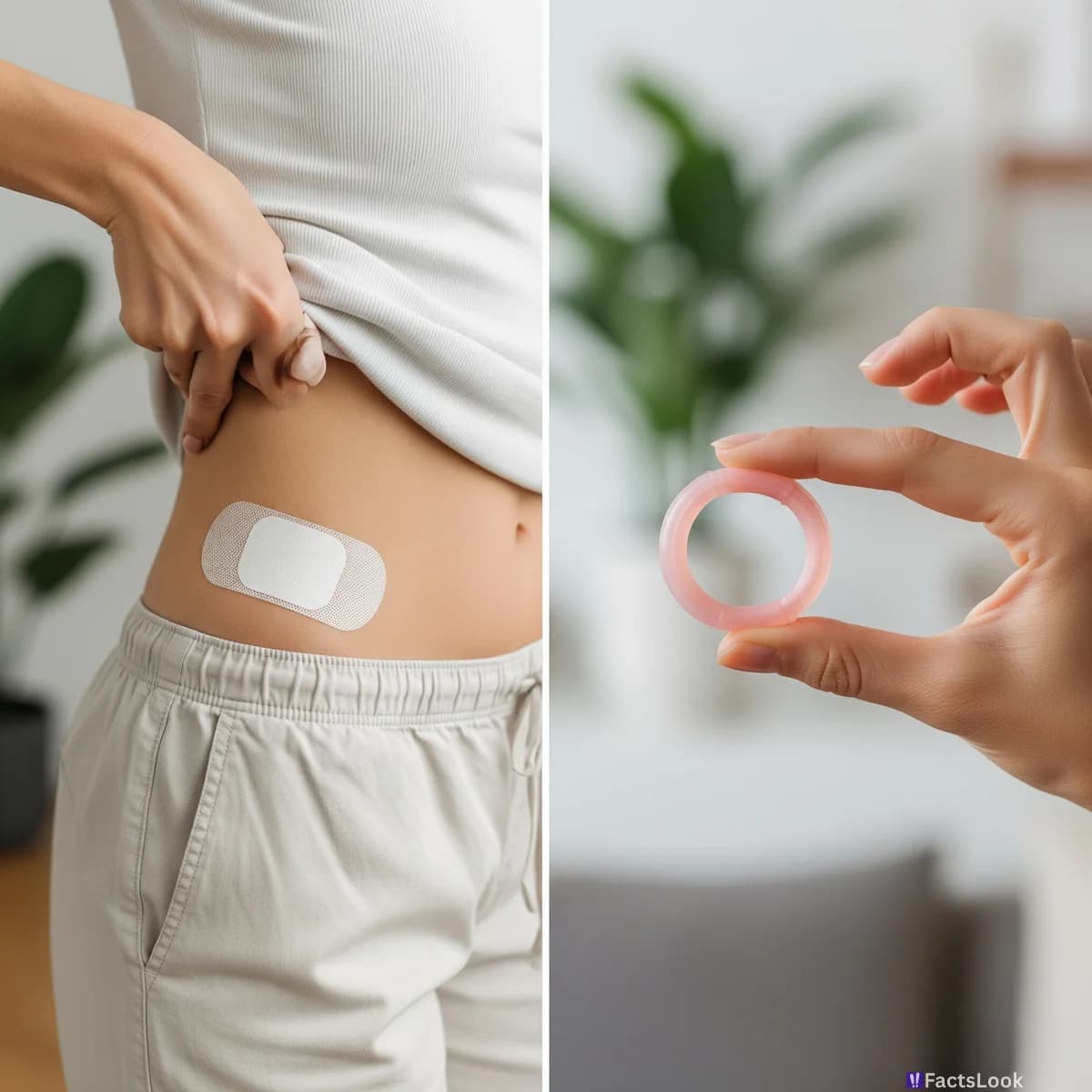
The Patch and Ring Deliver the Same Hormones — But Differently
The contraceptive patch (Xulane) and vaginal ring (NuvaRing) both deliver ethinyl estradiol and a progestin. The difference: absorption route. Patches go through skin; rings bypass first-pass liver metabolism by absorbing through vaginal tissue.
Both have higher estrogen exposure than low-dose pills — which matters for thromboembolism risk in smokers over 35.
The Birth Control Shot Causes Fertility Delays — Sometimes Years
Depo-Provera (medroxyprogesterone acetate) suppresses ovulation. Return to fertility: average 9–10 months after the last injection. But for 30% of users, ovulatory cycles don't return for 18 months or longer.
This isn't dangerous — it's just frustrating if you're trying to conceive.
Vasectomies Are Reversible — But Only in Skilled Hands
Vasovasostomy (vasectomy reversal) success rates: 90–95% if done within 3 years, dropping to 50% after 10 years. Sperm counts recover in about 80% of reversals within a year.
The catch: reversal requires specialized microsurgery, costs $10,000–$15,000 out of pocket, and depends heavily on the original technique used. If you're 100% sure you're done, vasectomy is straightforward. If you might want kids later, freeze sperm first.
Copper IUDs Cause Heavier Periods — Hormonal IUDs Lighten Them
Paragard (copper IUD) is non-hormonal — which appeals to people avoiding synthetic hormones — but periods are 50% heavier on average. Some users bleed for 10+ days.
Hormonal IUDs (Mirena, Liletta, Kyleena) do the opposite: they thin the uterine lining, reducing or eliminating periods. A Mirena can reduce bleeding by 90% over 12 months.
Spermicide Alone Has a 28% Failure Rate — Use It With Barriers
Nonoxynol-9, the most common spermicide chemical, kills sperm on contact — but only if it stays in place. Typical use failure rate: 28% per year. That's not contraception; it's educated gambling.
Combining spermicide with condoms brings typical use efficacy to 97%. Alone, it's a backup, not a plan.
Phexxi — The First Non-Hormonal On-Demand Gel — Was Approved in 2020
Phexxi (lactic acid, citric acid, potassium bitartrate) lowers vaginal pH to 3.5–4.5, creating a sperm-hostile environment. Applied 1 hour before sex, it works on demand — no hormones, no daily routine.
Typical use failure rate: 7%. That's higher than hormonal methods but meaningful for people who react badly to synthetic hormones. Planned Parenthood overview compares all methods.
2026 Is Actually a Big Year for Birth Control — Here's What's Real
The title promises 'what's next in 2026.' Here's what you can actually track:
-
YCT-529, a male oral contraceptive developed by the University of Minnesota and YourChoice Therapeutics, completed Phase I human safety trials in 2024. Phase II is underway as of 2025. Scientific American reports it was well-tolerated in men with no serious adverse events. No hormone suppression.
-
ADAM (Adjudicated Male Contraception), a reversible male implant developed by Contraline, is in early human trials. The company announced a trial expansion in late 2025.
-
NEXT Life Sciences' Plan A — a hydrogel male contraceptive injected into the vas deferens — entered Phase II clinical trials in Australia as of early 2026. NEXT Life Sciences confirmed this.
-
Cornell's Gunda Georg lab published primate trial results in April 2026 showing 100% efficacy with zero pregnancy in 24 weeks of testing. Cornell University reported this as a 'big step.' Human trials are next.
What's hype: gene editing birth control, personalized contraception based on genetics, anything claiming to launch commercially in 2026. None of those are real. The real timeline: 2028–2032 for regulatory approval on the leading candidates.
Common Questions About Birth Control — Answered
Does birth control cause weight gain? Research suggests no — a Cochrane review of 49 trials found no consistent evidence linking hormonal contraceptives to weight change. Any perceived weight gain is more likely from natural age-related metabolism changes or water retention that normalizes within a few months.
Is it safe to use birth control for years without breaks? Yes — medical consensus supports continuous long-term use for most healthy users. The 'break' recommendation was never evidence-based; it originated from outdated monitoring practices. WHO guidelines recommend annual checkups rather than medication holidays.
What if I'm using herbal supplements with birth control? St. John's Wort reduces hormonal contraceptive effectiveness by accelerating liver metabolism of estrogen. CBD and melatonin have no confirmed interactions with birth control. For more on how substances interact with your system, see our guide to Cannabis Effects.
Can I use emergency contraception as regular birth control? No — it's designed for occasional use and is less effective than ongoing methods. The copper IUD as emergency contraception is the exception because it's also a long-term solution.
What's the most effective reversible method? Hormonal IUDs and the implant have the lowest typical-use failure rates (less than 1%) because they remove user error from the equation entirely.