 FactsLook
The Alpha Wolf Never Existed: 25 Facts From the Scientist Who Spent 25 Years Trying to Kill the Myth
What this list is (and why the alpha idea needs to die)
The "alpha wolf" idea has shaped dog-training books, leadership seminars, and the way people think about wild canids for over 50 years. The wildlife biologist who helped popularise the term, L. David Mech, has spent roughly 25 years publicly asking the world to retire it. Everything below comes from wild-wolf research, not from the captive-pack studies that built the myth.
The scientist behind the idea has spent 25 years trying to take it back
The term "alpha wolf" entered popular science in 1970, when wildlife biologist L. David Mech published The Wolf: Ecology and Behavior of an Endangered Species. After 13 summers observing wild packs on Ellesmere Island, Mech concluded the term was misleading for natural packs. In a 1999 paper in the Canadian Journal of Zoology, he argued wild packs are almost always families, not rival coalitions.
A wild wolf pack is a family, not a hierarchy
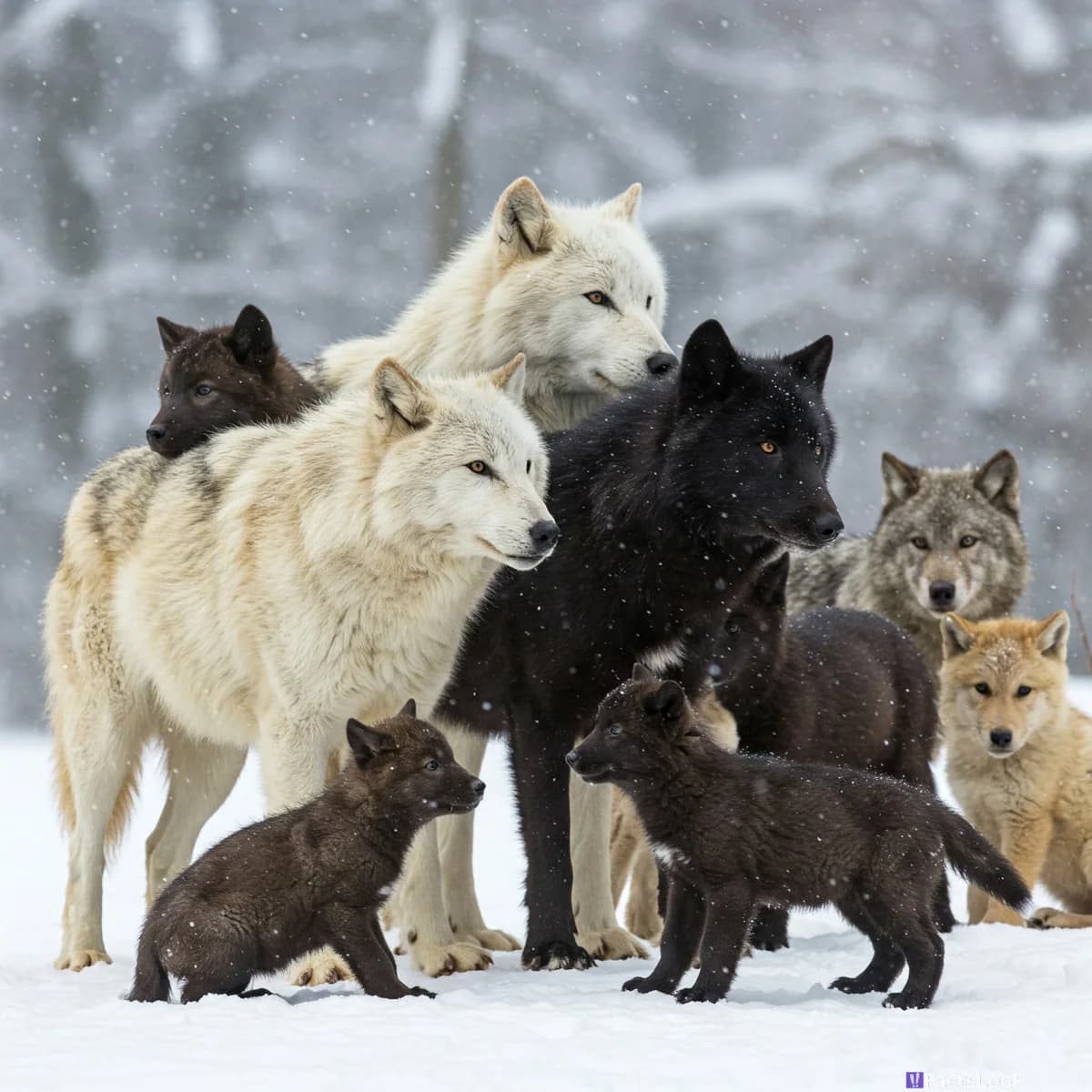
Wild wolf packs are not collections of unrelated rivals fighting for dominance. They are family groups — a breeding pair and their offspring from one or more years. The "alpha male" and "alpha female" are usually just dad and mum. Parents lead by coordinating hunts, caring for pups, and guiding movement, not by endlessly fighting their own children.
The myth was built on captive wolves, not wild ones
The "alpha" idea grew out of mid-20th-century research on captive wolves — unrelated individuals forced together in artificial enclosures. In those conditions, wolves did form dominance hierarchies and compete aggressively. Those behaviours are artifacts of captivity, not the natural state. As Mech has argued, the alpha concept is a "useful fiction" for captive packs but not for wild ones (The New Yorker).
Wolves once ranged across most of the Northern Hemisphere
Wolves evolved in North America and Eurasia and still hold territory across Canada, the US, Russia, and parts of Europe. Human persecution wiped them out of most of western Europe, the British Isles, Japan, and large swaths of the US Midwest and East Coast. Gray wolves (Canis lupus) now occupy roughly 10–15% of their historical range in the contiguous US (USFWS species profile).
Coyotes share a genus with wolves but diverged around a million years ago
Coyotes (Canis latrans) split from gray wolves roughly 1 million years ago, far more recently than once assumed (Wiley Ecology and Evolution, 2021). They are close enough genetically that the two species can still interbreed and produce viable hybrid offspring. Despite sharing a continent and a genus, coyotes evolved to be smaller, more generalist, and more adaptable.
A wolf howl can carry up to 10 km
A pack howl can carry up to 10 km (about 6 miles) in open forest and tundra, based on acoustic field measurements referenced by wolf biologists. Howling is not primarily a territorial display, as commonly believed — Scientific American reports it functions mainly as a social cohesion signal. Wolves howl to reunite separated members, coordinate movement, and reinforce pack bonds.
Almost nothing hunts an adult wolf except humans
Wolves sit at the top of their ecosystems as apex predators. Almost no animal preys on an adult wolf in the wild. The main threats are human: habitat loss, vehicle strikes, and targeted culling. That apex status puts wolves in rare company — see our sperm whales piece for another top predator running into the same human ceiling.
A wolf's nose has up to 300 million scent receptors
Wolves carry roughly 200–300 million olfactory receptors, compared to about 5–6 million in humans (Wikipedia: Dog sense of smell; PMC review on canine olfaction). They can detect a deer from roughly 1 km (0.6 miles) downwind using body odour alone. Pack members routinely follow scent trails for hours, signalling direction through body language as much as vocalisation.
Wolves can hit 35–40 mph in a chase
Wolves can reach roughly 56–64 km/h (35–40 mph) in short bursts while chasing prey, according to the Wolf Conservation Center. They can also hold around 25 km/h (about 15 mph) for several kilometres. Long legs, a deep chest, and a specialised cardiovascular system let them outlast most prey.
A wolf pack may patrol hundreds to thousands of square kilometres
Wolves have enormous home ranges, and pack territory size scales with prey density. The USFWS species profile lists gray-wolf territory at roughly 25–1,500 square miles (65–3,900 km²), depending on habitat. Ranges shrink in dense-prey areas like Yellowstone and balloon where prey is sparse.
Wolves survive from −40°C winters to desert heat
Wolves live in the Arctic, the desert, and almost everything in between. Gray wolves (Canis lupus) survive in temperatures as low as −40°C. The Arabian wolf (Canis lupus arabs) has adapted to extreme heat and chronic water scarcity. Their flexibility comes from behaviour — adjusting diet, denning patterns, and activity cycles to local conditions — not from a narrow set of physical adaptations.
Reintroducing wolves to Yellowstone reshaped the entire ecosystem
Gray wolves were reintroduced to Yellowstone in 1995 and 1996, and the effects cascaded across the entire ecosystem (Yellowstone Park). Elk, no longer free to overgraze riverbanks, stopped browsing young aspens and willows. Vegetation recovered, stabilising soil and cooling water temperatures. One species, added back to the landscape, helped reshape the physical geography itself.
Wolves avoid fights through long-distance signalling
Wolves are highly territorial and mark range borders with scent — a mix of urine and gland secretions. These marks communicate identity, reproductive status, and timing to rival packs. When ranges overlap, wolves avoid confrontation through howls and scent posts rather than direct fighting. Most wolves die without ever fighting another wolf.
Wolf paw prints can be distinguished from dog prints
A wolf's paw print is roughly 10 cm long and 7 cm wide — slightly larger than prints from comparably sized domestic dogs. Wolves have two large digital pads and a triangular central pad that together create a distinctive shape. Their prints also tend to fall in a straighter, more purposeful line than dog tracks, which often meander.
All pack members help raise the pups
Wolves are cooperative breeders. The dominant pair breeds, and all pack members — including older offspring from previous years — help raise the pups. Duties include regurgitating food for pups, guarding the den, and babysitting while parents hunt. This kind of shared care shows up across the animal kingdom, including in our jellyfish piece on biological immortality — different life stories, similar investment in the next generation.
Wolves hear well beyond human range
Wolves can hear frequencies well above the human upper limit of about 20 kHz, with sensitivity extending into the high-frequency range used by small prey. Research suggests they use that range to track rodents moving through undergrowth and low-frequency howls to stay in contact over distance. Combined with scent and vision, this gives wolves a sensory picture humans simply cannot replicate.
Wolves are opportunistic and eat far more than just big game
Wolves mostly eat ungulates — elk, moose, deer, bison, and caribou, depending on the region. They are opportunistic and will also take beavers, rabbits, birds, fish, carrion, and berries in lean periods. A Yellowstone pack was once documented hunting and killing a ground squirrel. It is an unusual event, but it shows how flexible wolf diets can be when prey is scarce.
Dogs split from wolves somewhere between 20,000 and 40,000 years ago
The gray wolf (Canis lupus) is the ancestor of the domestic dog (Canis lupus familiaris). Genetic evidence points to a domestication window of roughly 20,000–40,000 years ago, just before or during the Last Glacial Maximum (Wikipedia: Domestication of the dog). The likely pathway: less aggressive, more human-tolerant wolves hanging around hunter-gatherer camps. Unlike wolves, dogs have since evolved to digest starch-rich diets and read human social cues.
Wolves and dogs behave very differently despite shared genetics
Wolves and dogs can interbreed, but their behaviours diverge sharply. Wolves mature more slowly, reaching breeding age at 2–3 years versus 6–12 months for most dogs. They are far less tolerant of unfamiliar humans and show almost none of the innate human-following behaviour dogs display from birth. Feral dogs tend to scavenge rather than hunt cooperatively, with far less stable social structures than wolf packs.
Global wolf numbers are stable, but some subspecies are critically endangered
The gray wolf is listed as Least Concern globally by the IUCN Red List, with a world population estimated at 200,000–250,000 (World Land Trust). The red wolf (Canis rufus) in the southeastern US had a 2024 wild total of just 27–31 individuals (USFWS Red Wolf Recovery Program). The Mexican gray wolf (Canis baileyi) reached a minimum of 286 in the wild in 2024 (USFWS 2024 annual report).
Wolves have large brains for their body size
Wolves have an above-average brain-to-body mass ratio among large carnivores. Research suggests evolutionary pressure to navigate large territories, maintain pack relationships, and make fast decisions during cooperative hunts may have shaped their neural architecture (PMC: carnivore brain size). Don't take the ratio as a clean intelligence score, though — that link is debated across species.
Wild wolf packs have very low internal aggression
Wolves live in family units with remarkably low internal aggression compared to most social mammals. Fights within a pack are uncommon once roles are settled, and serious injury is rare. The breeding pair usually leads through familiarity and social bond rather than intimidation. High within-pack aggression is almost exclusively a feature of captive wolf groups, where unrelated animals are forced together.
US gray wolves number roughly 5,000–6,000, with legal protections shifting
Across the contiguous US, the gray wolf population sits at roughly 5,000–6,000 animals, clustered in three regional populations: the Western states, the Great Lakes, and the Mexican gray wolf recovery area (WWF species page). Legal protections remain contested — a February 2022 federal court order restored Endangered Species Act protections across most of the contiguous US, and rulings on delisting have continued into 2025. In Europe, populations are growing but face pressure from livestock conflicts and managed hunting.
Wolves have exceptionally strong family bonds
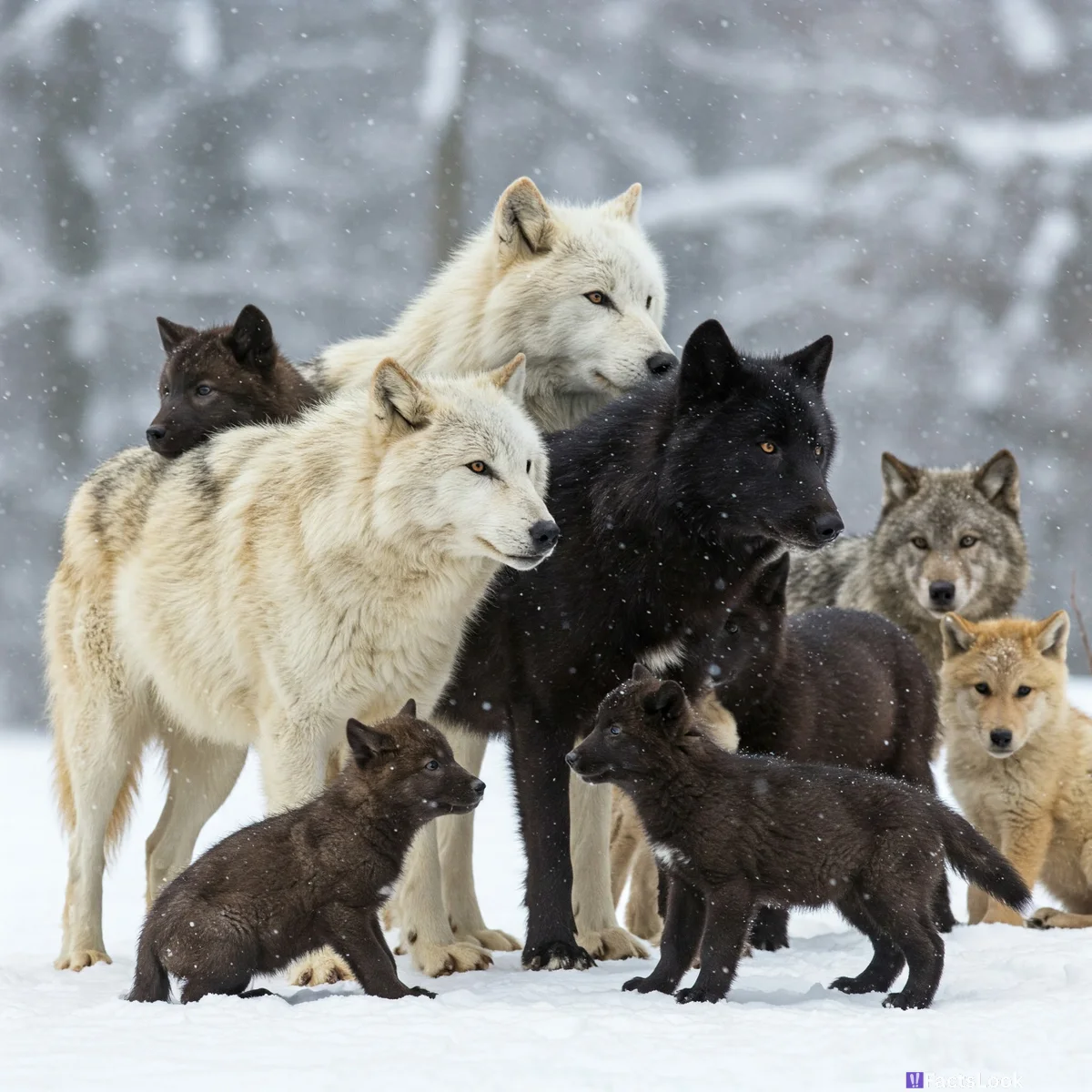
Wolves are devoted parents and maintain close relationships within their families for years. Offspring often stay with their parents, helping raise later litters and contributing to the pack's success. This multigenerational family structure helps transfer hunting skills, territory knowledge, and pup-rearing experience across generations.
Frequently Asked Questions
Globally, are wolves endangered? Gray wolves (Canis lupus) number around 200,000–250,000 worldwide and are classified as Least Concern by the IUCN. A February 2022 federal court order restored ESA protections across most of the contiguous US, though state-level management plans still vary widely. Recovery is real but politically fragile.\n\nCan wolves and dogs recognize each other? Yes — research suggests wolves and dogs read each other's body language and vocalisations across the species barrier. Hybridisation is physically possible and does happen in the wild, which creates real genetic risks for small wolf populations. Encounters can also be unpredictable because the social signals don't always line up cleanly.\n\nWhat is the current conservation status of gray wolves? Gray wolves have recovered significantly in parts of North America since near-extermination in the early 20th century. The contiguous US population is roughly 5,000–6,000 across three regions (Western, Great Lakes, and Mexican). Subspecies like the red wolf (27–31 wild in 2024) and Mexican gray wolf (minimum 286 in 2024) remain critically endangered. In Europe, populations are growing but face livestock-conflict pressure and managed hunts.\n\nAre wolves the same species as dogs? Yes — dogs are a subspecies of Canis lupus, sharing roughly 99.9% of their DNA with wolves. Behaviourally, however, they are very different animals. Wolves mature slower, tolerate humans far less, and lack the innate social flexibility dogs evolved alongside people. A wolf raised by humans from birth still keeps its wild instincts in ways most dogs do not.
Got a wolf fact we missed?
Subscribe to our newsletter for a regular dose of fascinating facts. Know a wolf fact we missed, or a source that should be cited? Drop it in the comments with your source and we'll fact-check it for the next update.