 FactsLook
Sperm Whales Are Louder Than Jet Engines – 30 Wild Whale Facts
Introduction: Beyond the Breaches – Unveiling the World of Whales
They can be louder than a jet engine, live past their 200th birthday, and communicate across entire ocean basins. Whales are not merely large mammals — they are evolutionary anomalies, ecological engineers, and highly intelligent societies rolled into one. This list goes beyond the surface-level trivia to surface 30 facts that reveal why these ocean giants still have the power to surprise scientists and casual readers alike.
Whale Earwax Reveals Their Life Story
Whale earwax accumulates in concentric layers throughout a whale's life — much like the rings of a tree trunk. Each layer encodes a chemical record of stress hormones, pollutants, and life events. By dissecting a single earplug, scientists can reconstruct a whale's reproductive history, exposure to toxins, and even approximate age. It's one of the most intimate biological archives nature produces.
Source: NOAA
The Blue Whale's Heart Is Enormous
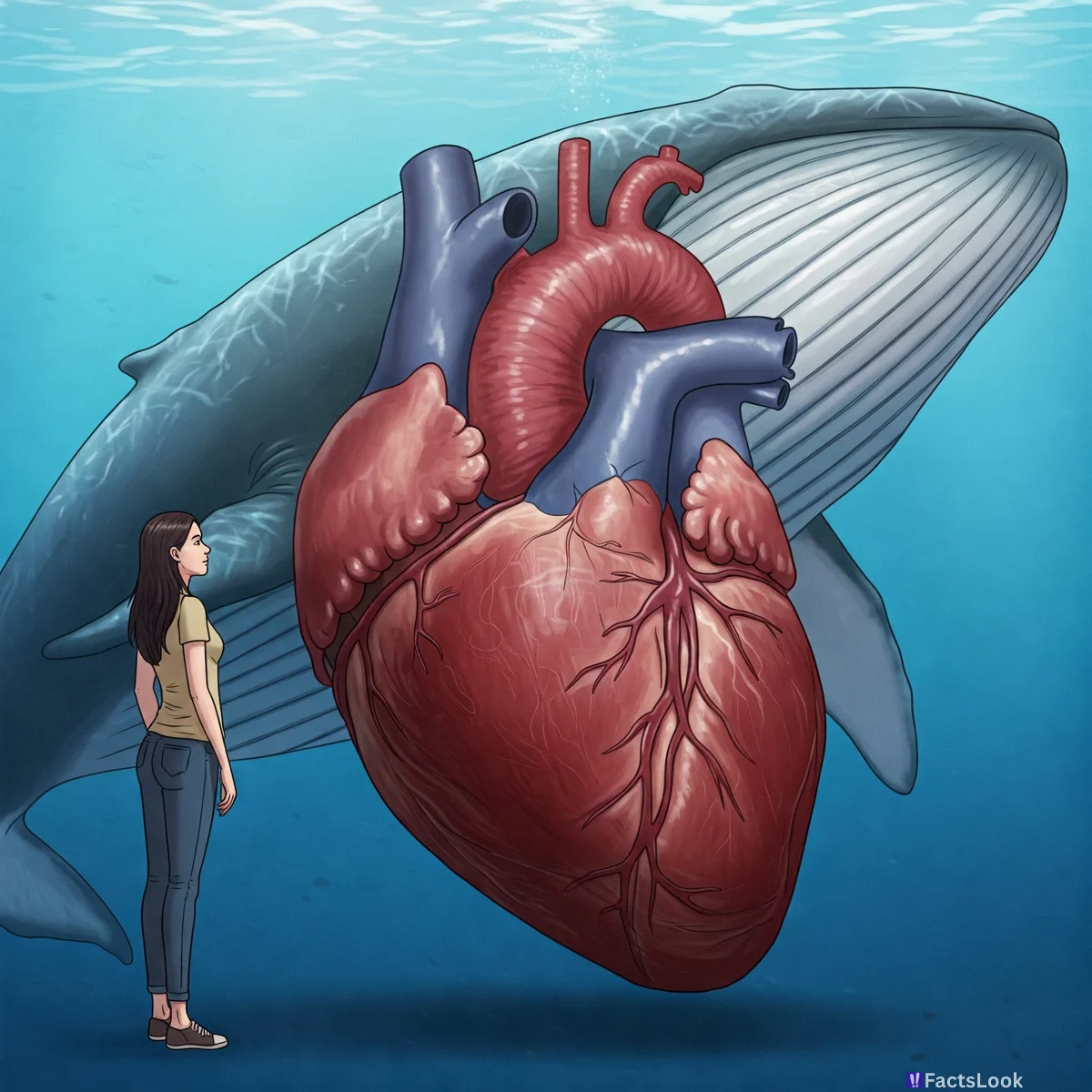
The blue whale holds two records simultaneously: it is the largest animal ever known to have existed on Earth, and it has the largest heart of any living creature. That heart weighs around 400 pounds (180 kg) and stands roughly 5 feet tall — roughly the size of a small car. Its main artery, the aorta, is wide enough for a small child to crawl through. At rest, it beats just 4–8 times per minute, and that pulse has been recorded from more than 2 miles away.
Source: Smithsonian Magazine
Whales Communicate in Complex 'Songs'
Male humpbacks perform some of the most elaborate songs in the animal kingdom — sequences of moans, grunts, and high-pitched cries that can last over 20 minutes and repeat for hours. These songs are not static: they evolve year to year, spreading across ocean basins as males in different populations copy and modify each other's versions. It's one of the clearest examples of cultural transmission in any non-human species, and no one fully understands why the songs change.
Sperm Whale Clicks Are the Loudest Sounds in the Animal Kingdom
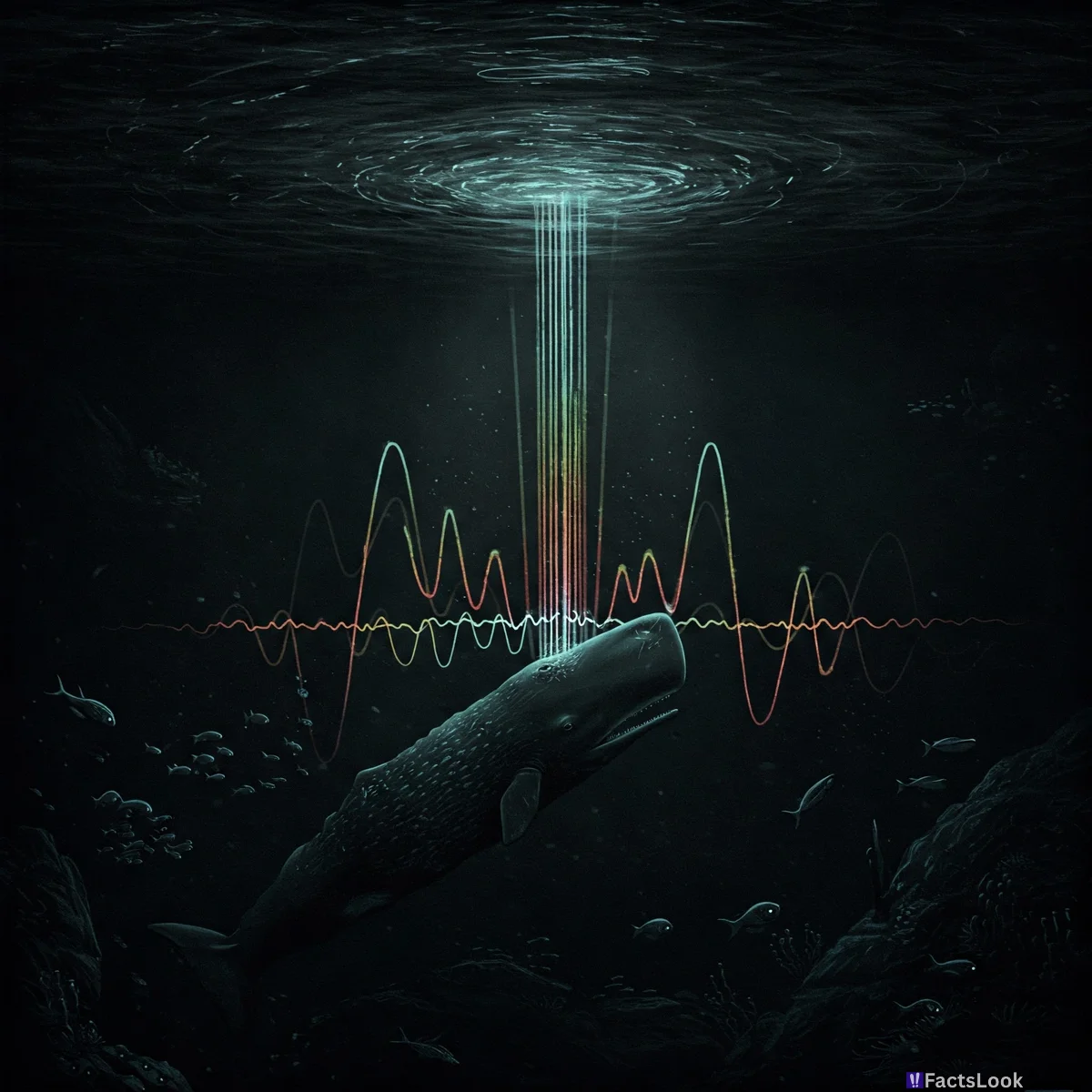
Sperm whales are louder than jet engines — their clicks reach 230 decibels underwater, a sound intensity that would rupture human eardrums at close range and disrupt sonar equipment. The clicks are echolocation signals used to hunt squid in near-total darkness miles below the surface, and researchers have traced them across entire ocean basins. A single sperm whale can be heard by others on the opposite side of the planet.
Source: Britannica
Gray Whales Undertake Epic Migrations
Gray whales cover roughly 12,000 miles round trip annually — the longest migration of any mammal — moving from Arctic feeding grounds to the warm, sheltered lagoons of Baja California, Mexico to breed. They navigate using a combination of Earth's magnetic field, celestial cues, and learned cultural routes passed down through generations. The same individual gray whales have been documented returning to the same lagoon for decades, making them creatures of remarkable memory.
Orcas Have Distinct Cultures and Dialects
Despite their name, orcas are the largest members of the dolphin family, not true whales — they belong to the family Delphinidae. Different orca populations have developed entirely distinct cultures: resident pods hunt fish and communicate with signature calls unique to each group, while transient pods operate in near-silence as they stalk marine mammals. The cultural knowledge — hunting techniques, vocalizations, prey preferences — is passed down matrilineally, meaning young orcas learn their entire worldview from their mothers.
Source: National Geographic
Bowhead Whales Can Live Over 200 Years
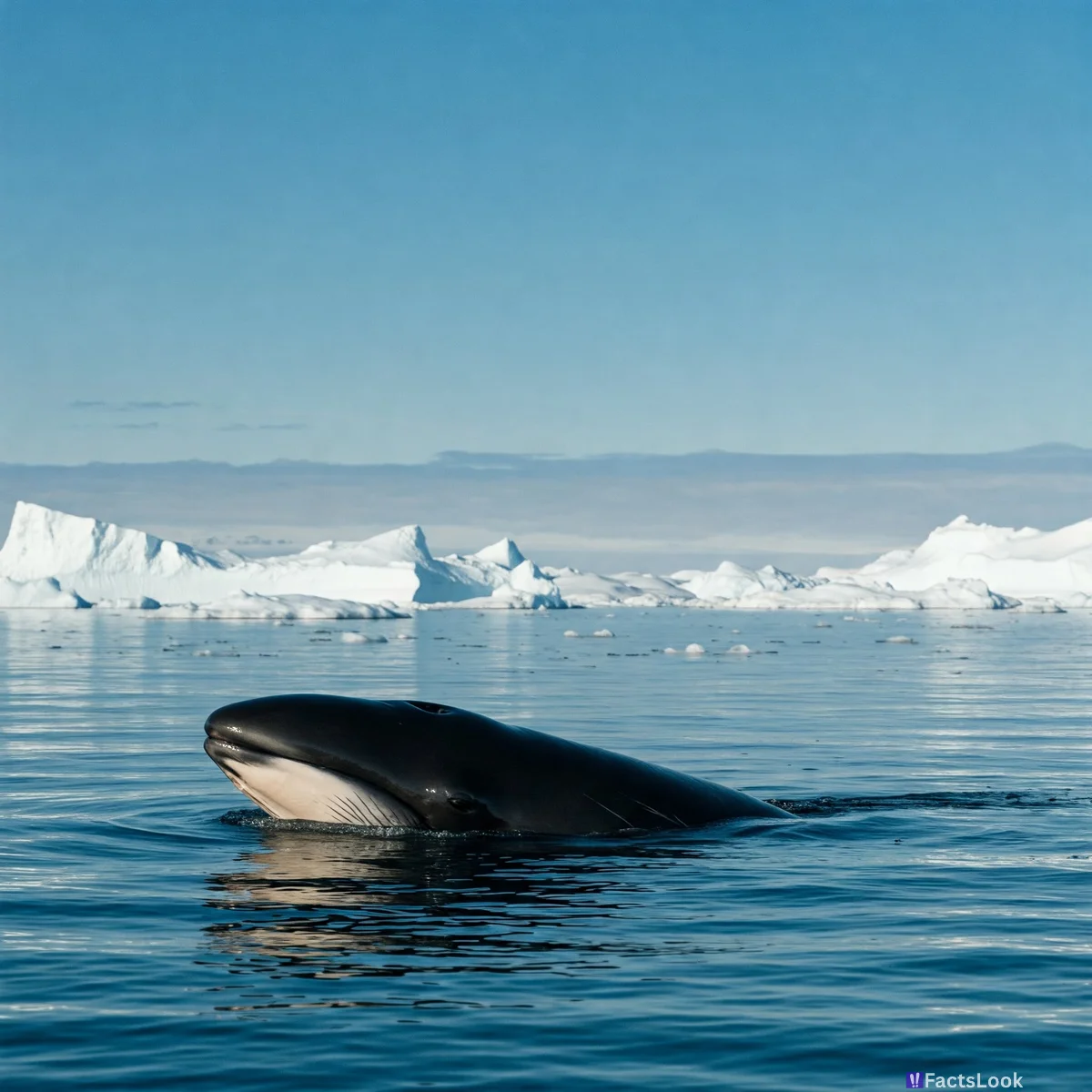
Bowhead whales hold the record for longest lifespan among mammals — some individuals have been confirmed at over 200 years old, with one famously carrying a 19th-century sharpened stone harpoon embedded in its blubber since the 1890s. Researchers believe their remarkable longevity stems from exceptionally efficient DNA repair mechanisms and a low metabolic rate that minimizes age-related cellular damage. Scientists studying their genes are working to understand whether those mechanisms could inform human longevity research.
Source: NOAA Ocean Service
Whales Help Fertilize the Ocean
When whales surface and defecate, they release iron-rich plumes that act as natural fertilizer for phytoplankton — the microscopic algae that form the base of the entire marine food web and produce roughly half of the world's oxygen. This "whale pump" distributes nutrients from the deep ocean back to the surface, sustaining ecosystems far beyond the whales themselves. Scientists estimate that restoring whale populations to pre-whaling levels could significantly boost ocean productivity, making whale conservation a direct climate action.
Fin Whales Have Asymmetrical Coloration
Fin whales are uniquely lopsided in their colouring: the right side of their lower jaw is pale or white, while the left is dark. The asymmetry extends inside the mouth and may even affect how they hunt, with some researchers suggesting the pale right side helps them approach prey without alerting it. The reason for the asymmetry is still debated, but it makes individual fin whales instantly identifiable to researchers who know what to look for. This is one of those facts that makes you realise how much we still don't know about even the best-studied whales.
Humpback Whales Use Bubble-Net Feeding
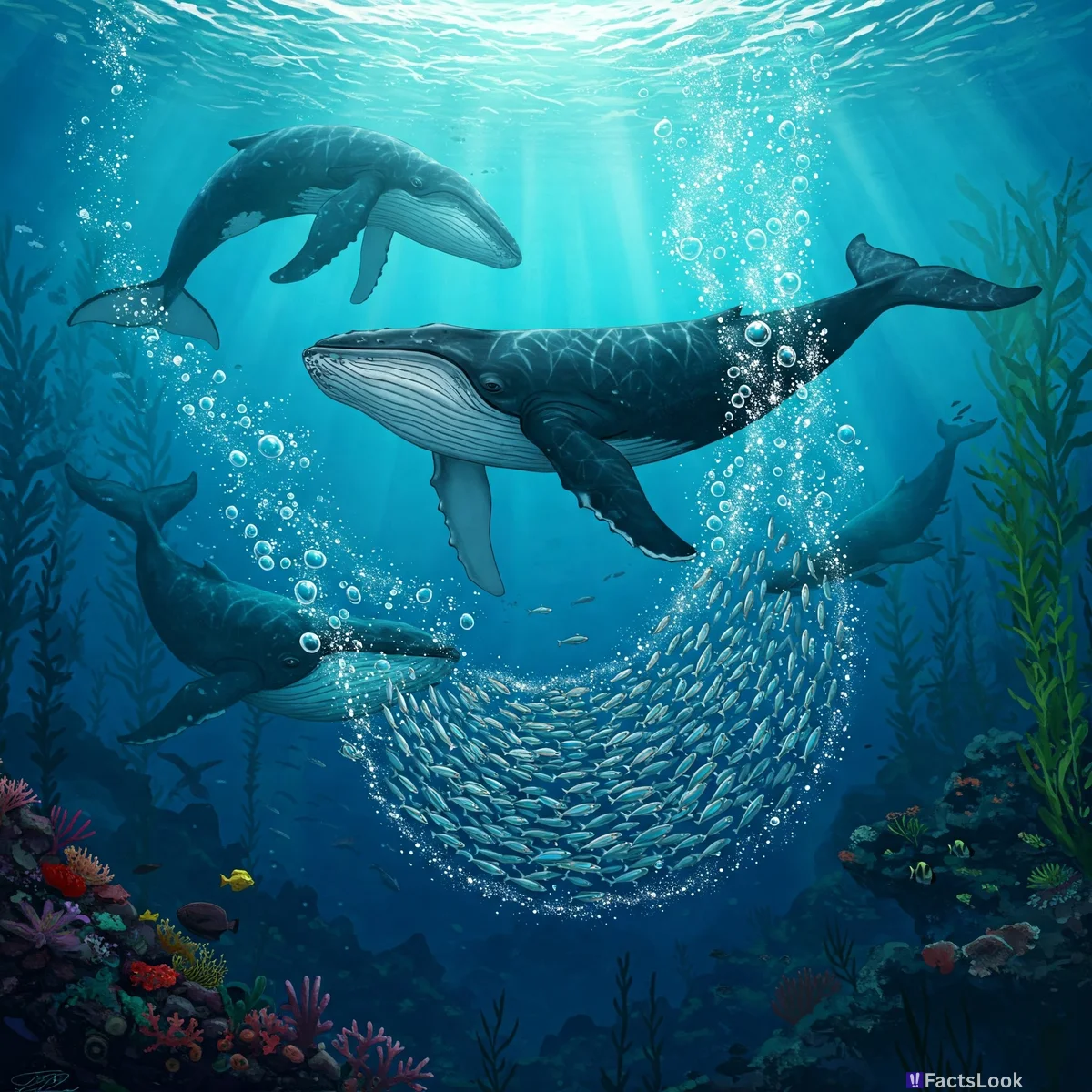
Humpbacks have engineered one of the most theatrical hunting strategies in nature: bubble-net feeding. A group of whales will dive below a school of fish, then spiral upward while releasing a curtain of bubbles that confuses and concentrates the prey into a tight ball. The whales then surface through the center with their mouths agape, engulfing thousands of fish in a single pass. Some individual humpbacks appear to specialise in producing the bubbles while others drive the fish — a degree of coordination that borders on choreographed.
Narwhals Possess a Unique 'Tusk'
The narwhal's spiral tusk — which can reach nearly 10 feet long — is actually an overgrown canine tooth that protrudes through the upper lip. Its surface is covered in millions of nerve endings, making it extraordinarily sensitive. Research suggests the tusk can detect changes in water temperature, pressure, and salinity, and may even sense electrical fields generated by the movement of prey. Males occasionally cross tusks in a behaviour researchers call "tusking," possibly to assess dominance or resolve disputes. For centuries the tusk fueled unicorn myths; in reality, it is a sensory organ that puts most human-made instruments to shame.
Beluga Whales Are Known as 'Sea Canaries'
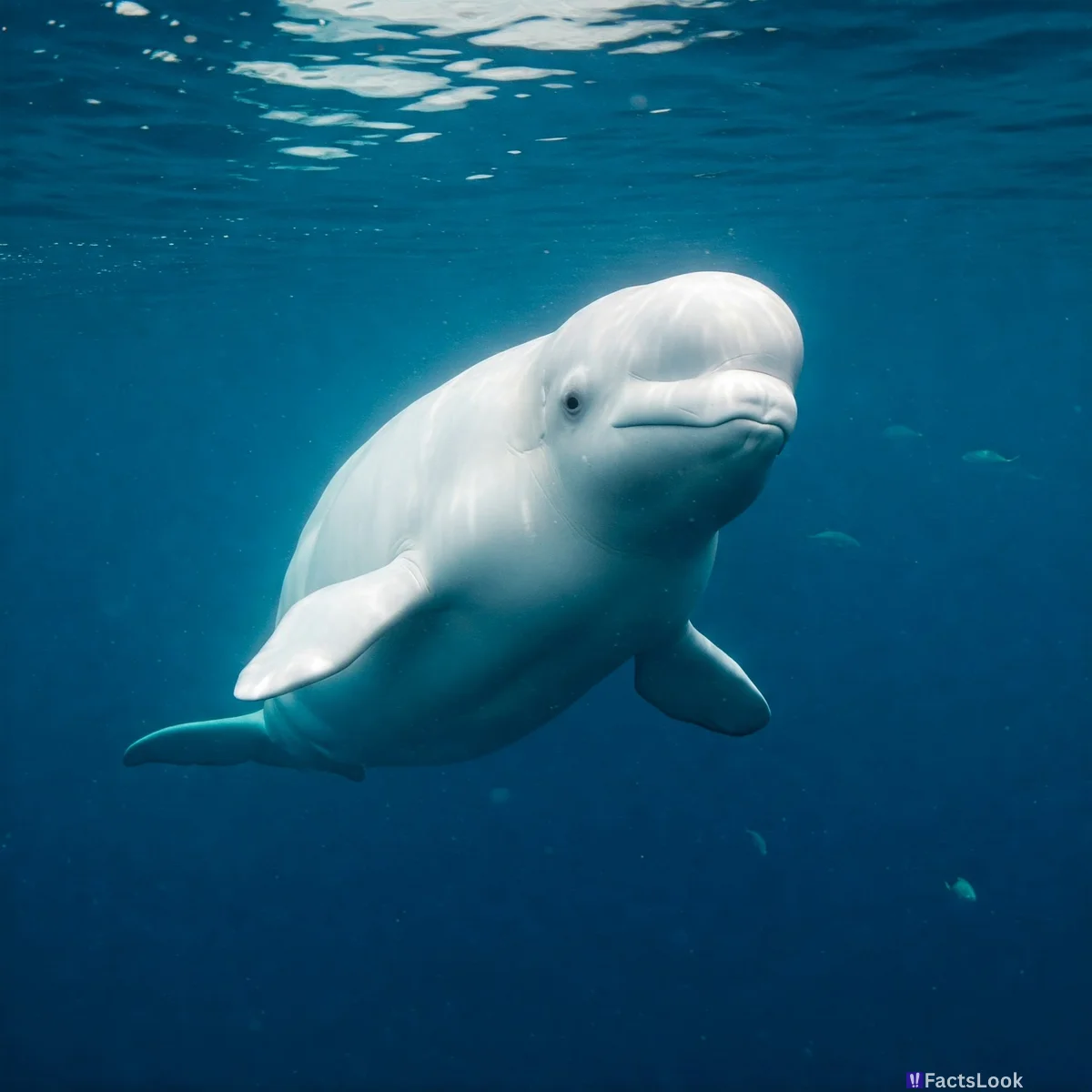
Beluga whales produce an extraordinary range of vocalizations — clicks, whistles, chirps, and what sound uncannily like human laughter and baby babble. Their versatility comes from a specialised air sac and extremely flexible phonic lips that allow them to modulate sound with remarkable precision. Captive belugas have been documented mimicking human speech patterns in rhythm and tone, not just isolated sounds. This earned them the nickname "sea canaries" among sailors and researchers alike. Belugas also have a visible "melon" — a distinct rounded forehead that can change shape, which they use to focus sound for echolocation.
Right Whales Have Callosities – Unique Skin Patterns
Right whales carry rough, raised patches of skin called callosities across their heads and jaw — areas colonized by tiny crustaceans (cyamids, often called whale lice) that give each whale a unique pattern of raised white patches. No two right whales look exactly alike, making callosity patterns a reliable identification system used by researchers to track individuals across decades. Some whales have been catalogued from photographs going back to the 1970s, building a long-term record of their movements, reproduction, and survival. If you're interested in more deep-sea oddities, our ocean creatures post covers other marine animals with equally surprising adaptations.
Minke Whales Are the Smallest Baleen Whales
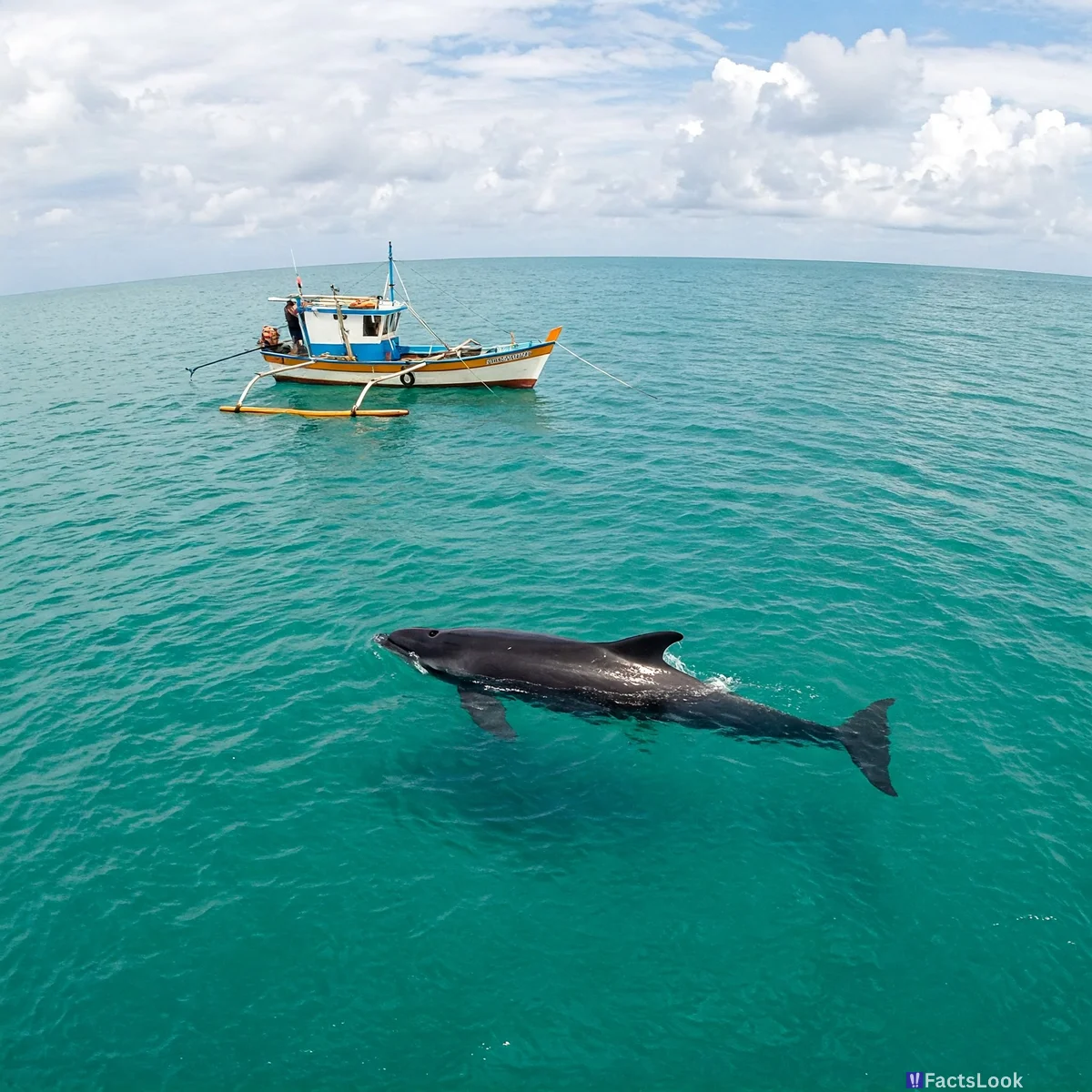
Minke whales are the smallest of the baleen whales — a category of filter-feeders that includes the blue and humpback — yet they still reach 23–35 feet in length, roughly the size of a school bus. They are the most abundant large whale species and, unlike most whales, they are relatively comfortable approaching vessels and displaying curiosity toward humans. Minkes produce distinctive clicking sounds that researchers use to detect and track them acoustically across ocean basins.
Pilot Whales Aren't True Whales
Despite their name, pilot whales are large oceanic dolphins belonging to the genus Globicephala, which is part of the family Delphinidae. They are second in size only to the orca among dolphins and share more anatomical and behavioural traits with dolphins — including their intelligence, social complexity, and tendency to strand in coordinated groups — than with any true whale. Their common name likely derives from the old belief that a lead whale guided the group, a misconception rooted in their tight matrilineal social bonds.
Some Whales Can Hold Their Breath for Over Three Hours
The record for the longest breath held by any mammal belongs to a Cuvier's beaked whale: 3 hours and 42 minutes, recorded in 2020 off the coast of California. These whales routinely dive to depths of nearly 3 kilometres (about 2 miles) while hunting for squid, using physiological tricks that seem to defy what scientists believed was biologically possible. They collapse their lungs to avoid pressure damage, shunt blood away from non-essential organs, and slow their heart rate dramatically. The mechanisms behind their performance are still being studied, and the latest data suggests their cells may handle low-oxygen conditions far better than any other mammal.
Source: Science News
Some Whales Have Teeth, Others Have Baleen
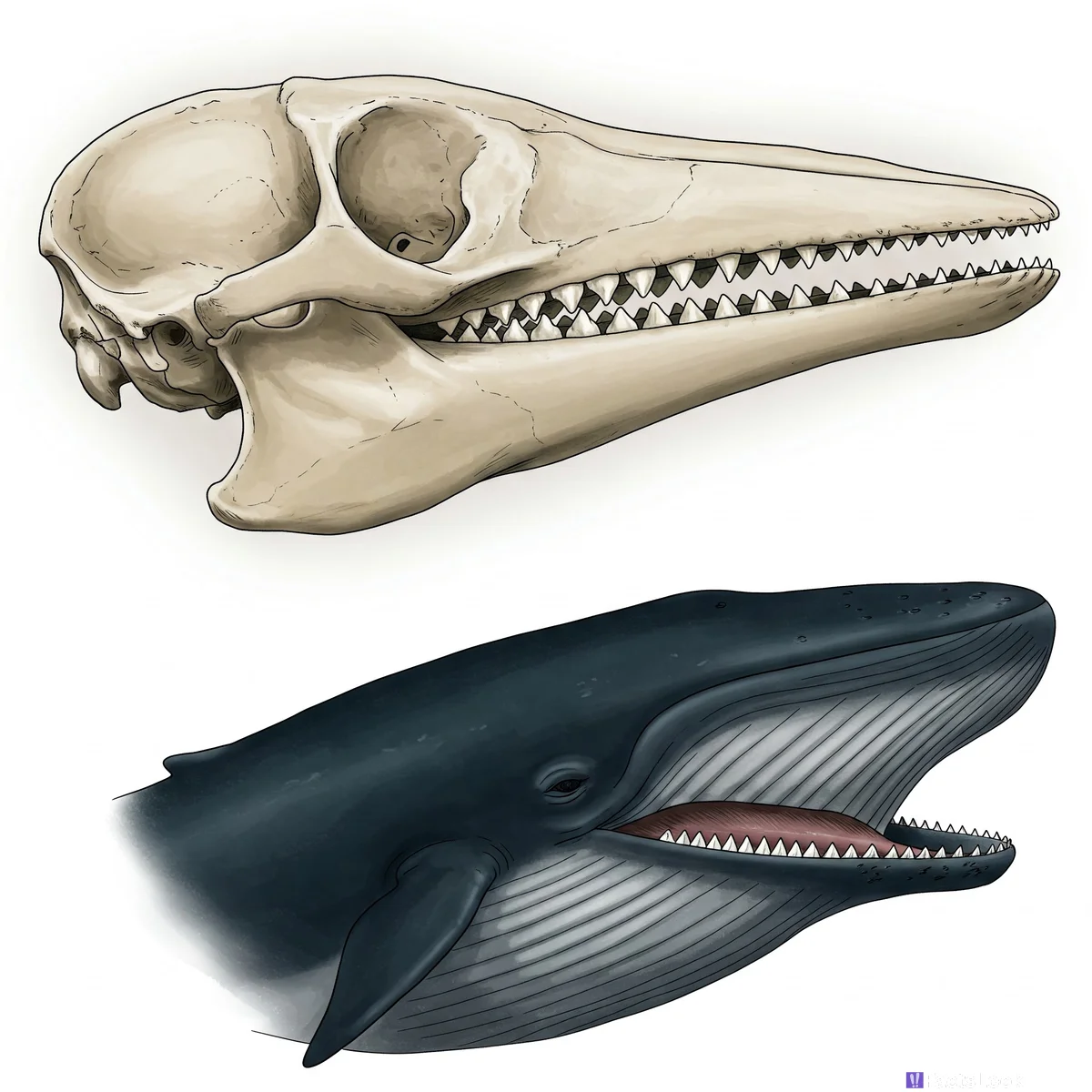
Whales diverged into two major lineages roughly 35 million years ago: toothed whales (Odontoceti), which include orcas, sperm whales, and belugas; and baleen whales (Mysticeti), which include blues, humpbacks, and fins. Toothed whales echolocate and typically hunt individual prey. Baleen whales are giants that filter enormous volumes of water through comb-like plates to capture krill and small schooling fish — a feeding strategy that supports their massive body size. The contrast between these two groups is one of the most dramatic evolutionary splits in the mammalian lineage. For more on the ocean creatures that share their habitat, see Surprising Facts About Ocean Creatures Living in the Deep Sea.
Whale Strandings Remain a Mystery
Mass strandings — where dozens or even hundreds of whales beach themselves simultaneously — are one of marine biology's most persistent puzzles. Naval mid-frequency sonar has been linked to some strandings, as the intense sound waves can disorient beaked whales most severely. Other contributing factors likely include geomagnetic anomalies, infectious disease, social cohesion during group foraging, and harmful algal blooms that produce neurotoxins. The issue is compounded by the difficulty of studying live strandings in real time: by the time researchers arrive, the surviving whales often need rapid reflotation to survive.
Calf Whales Drink an Enormous Amount of Milk
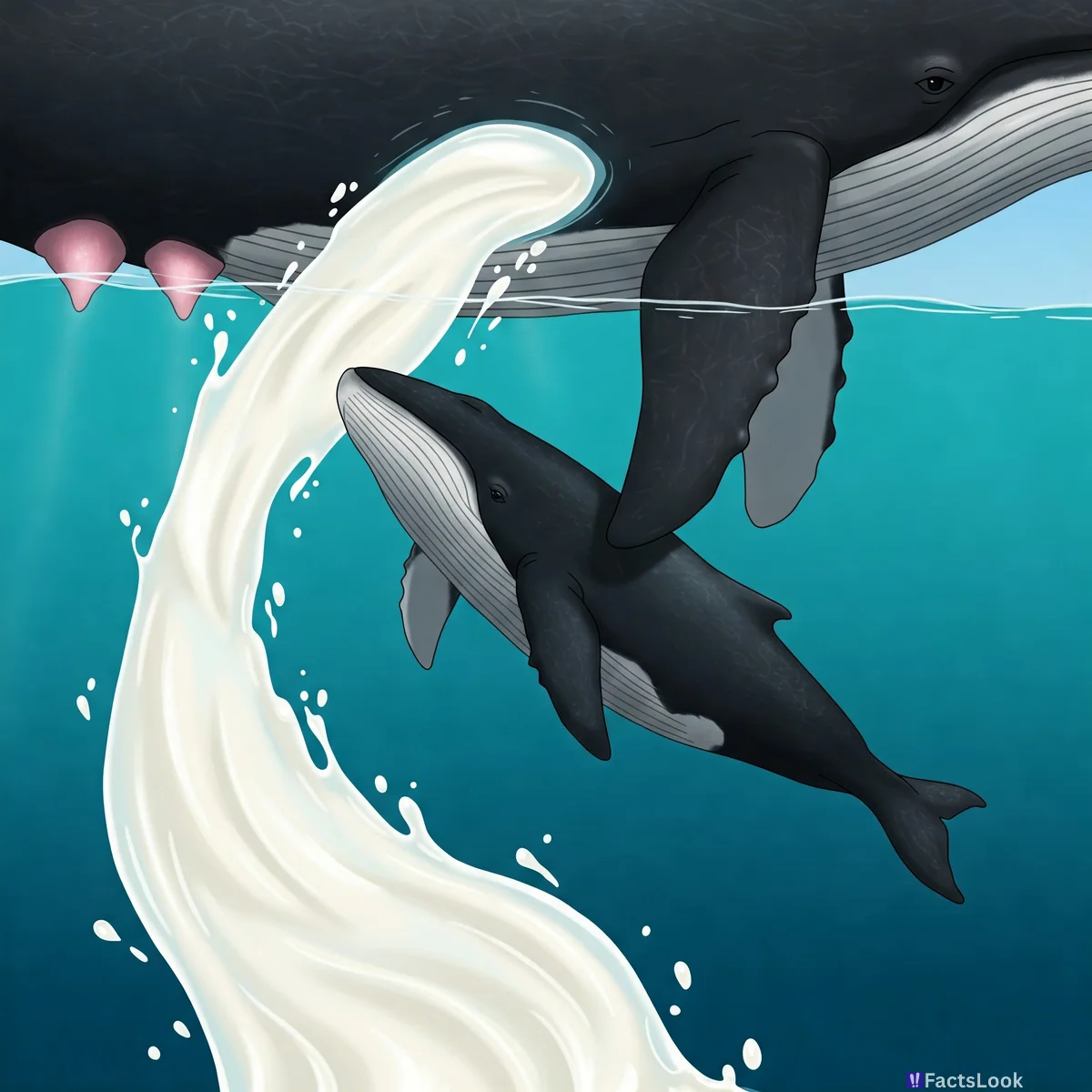
A newborn whale calf grows at a rate that would be medically alarming in any other species: up to 200 pounds per week, fueled by milk that is roughly 50% fat — far richer than human or cow milk. A calf may consume 50 gallons (190 litres) per day during peak nursing, which lasts from several months to over a year depending on the species. The mother's body condenses vast quantities of energy into a relatively small volume of milk, which she delivers with a specialised sphincter muscle while the calf nurse underwater. That explosive early growth is essential for a calf to be strong enough to migrate or dive alongside the rest of the pod.
The Vaquita is the Most Endangered Marine Mammal
With fewer than 20 individuals estimated to remain as of 2024, the vaquita porpoise is the world's most endangered marine mammal — and it is functionally extinct despite conservation efforts. The primary cause is drowning in illegal gillnets set for another critically endangered species, the totoaba fish, whose swim bladder commands extremely high prices on the black market. The vaquita's population has declined by over 98% since the 1970s, and it exists now only in a small corner of the Gulf of California. Saving it requires eliminating gillnet fishing entirely in its range — a challenge entangled with organised crime and regional economics.
Source: WWF
Whale Fossils Reveal Ancient Lineages
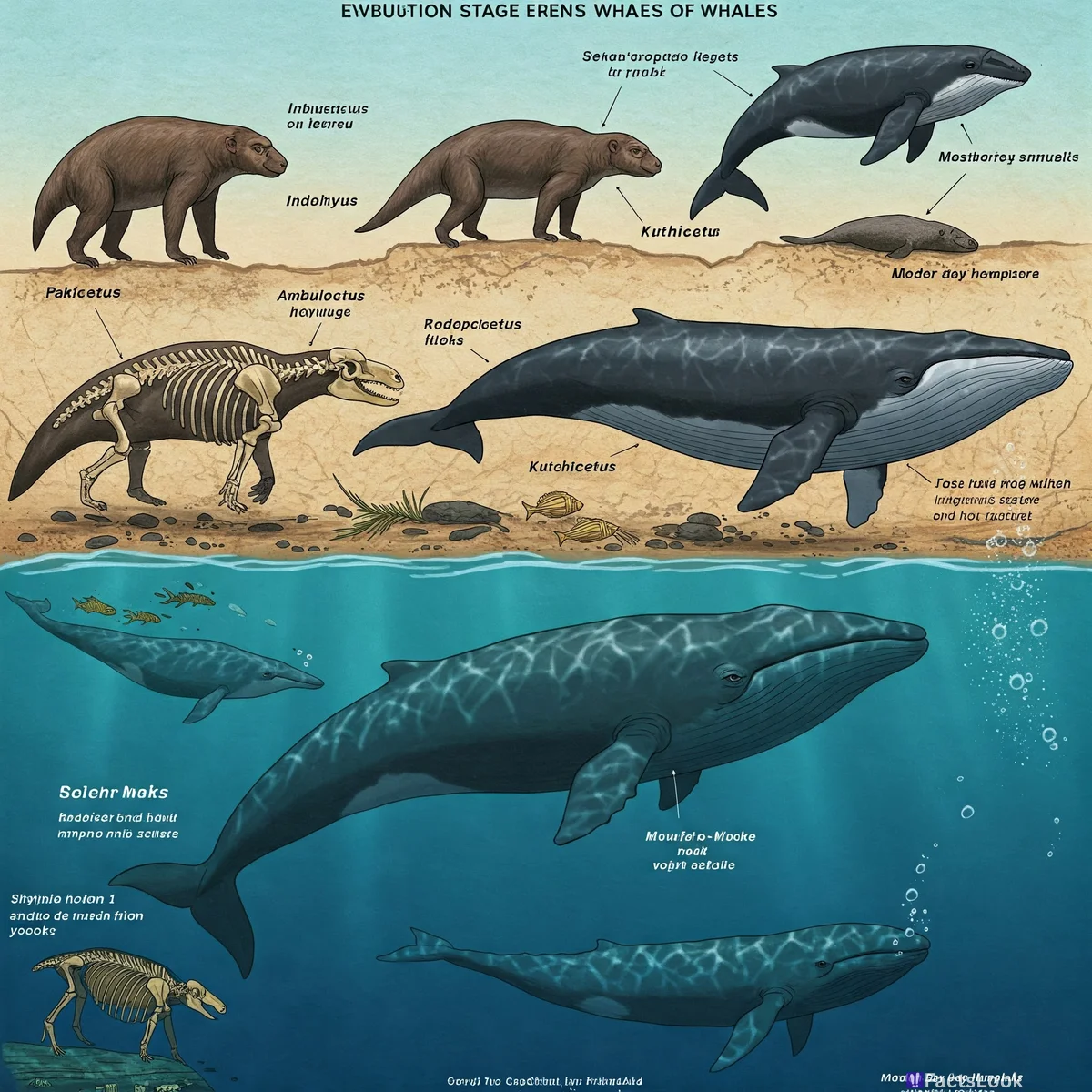
The fossil record documents a staggering evolutionary journey: whales evolved from a small, four-legged land mammal called Pakicetus over roughly 10 million years during the Eocene epoch. Ambulocetus — "walking whale" — shows an animal roughly the size of a crocodile with stubby limbs capable of both walking and swimming. Every major intermediate form has been found in rocks between present-day India and Pakistan, where the tectonic movements that formed the Himalayas also opened new ecological niches for mammals that ventured into shallow coastal waters. For more on other ancient creatures that have shaped our planet, see Beyond T-Rex: 7 Incredible Prehistoric Creatures You Didn't Know Existed.
Humpback Whales Exhibit Cooperative Hunting
Humpbacks don't just hunt solo — some populations coordinate attacks on much larger prey with surprising sophistication. In the Gulf of Maine, groups of humpbacks have been documented working together to herd blocks of herring into tight balls, with individual whales taking designated roles: some blow bubbles, others use the full length of their bodies as walls, and still others strike the water surface with their pectoral fins to create a final shockwave. The level of coordination is not hardwired; younger whales learn it by participating alongside experienced individuals in their pods.
Sperm Whale Families Are Matrilineal
Sperm whale society revolves around matrilineal family groups: clusters of related females and their offspring that stay together for life. Males leave these groups around adolescence and become largely solitary, roaming between female clans to mate. Within the family unit, females share childcare cooperatively — a behaviour known as alloparenting — and the group maintains an encyclopaedic knowledge of migration routes, feeding grounds, and acoustic traditions. The matriarch of a pod may remember events from decades before, effectively holding the community's institutional memory.
Blue Whales Can Produce Calls Heard Thousands of Miles Away
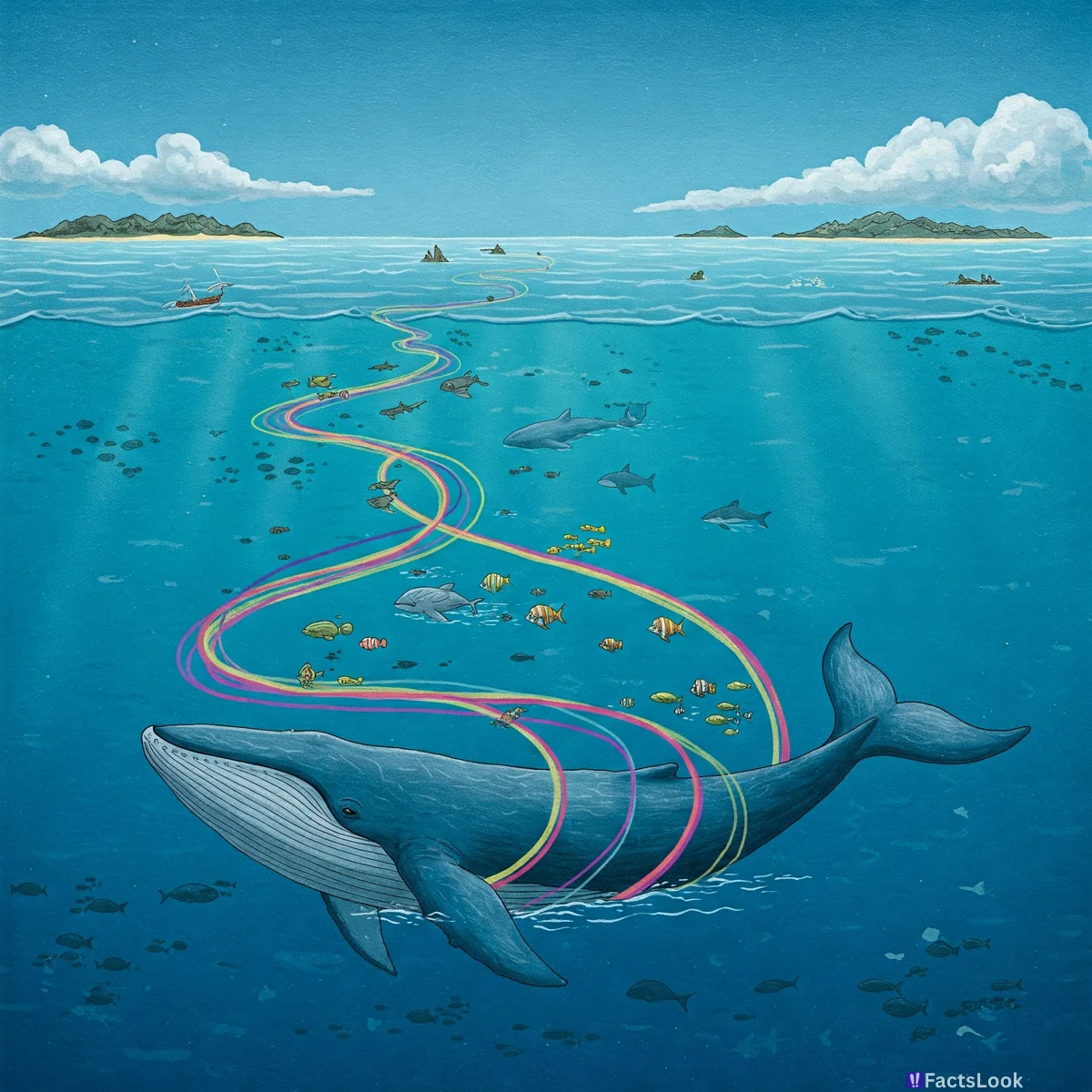
Blue whale calls are the loudest vocalisations of any animal on Earth — and they are also among the lowest frequency, often below the threshold of human hearing. These low-frequency moans can propagate across entire ocean basins with minimal loss of energy, allowing blue whales to communicate with potential mates thousands of miles away. Each blue whale population has its own distinctive call pattern, allowing acoustic researchers to track populations without ever seeing the animals. Their calls are so constant and pervasive that they contribute to the ocean's ambient sound baseline — a baseline that increasing shipping traffic is now making harder to study.
Gray Whales Scrape for Food on the Ocean Floor

Unlike most whales that feed in the water column, gray whales are benthic feeders — they roll onto their sides at the seabed and filter sediment through their baleen plates to extract small crustaceans and invertebrates. This bottom-feeding style leaves distinctive scars on the ocean floor and can require dives of only 30–60 feet, well within the range of their diving ability. Gray whales were nearly driven to extinction by commercial whaling in the 19th and 20th centuries, but populations have recovered substantially — a rare conservation success story that demonstrates what is possible when threats are removed.
Orcas Are Divided into Distinct Ecotypes
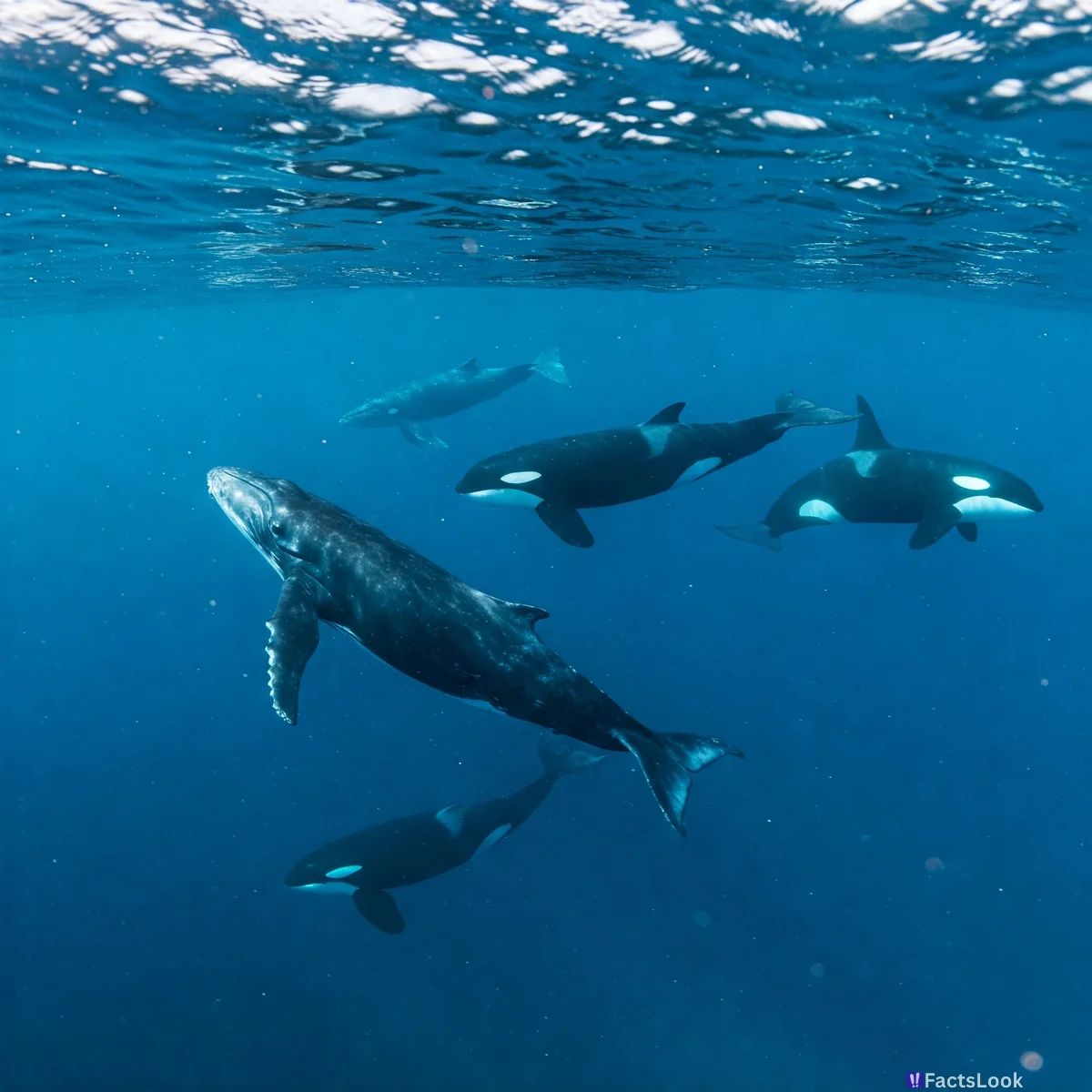
Scientists now recognise multiple distinct orca ecotypes — genetically and culturally differentiated populations that don't interbreed and may never socially mix, even in the same ocean basin. At least seven ecotypes have been identified in the Southern Hemisphere alone, each with different prey preferences, hunting techniques, and vocal repertoires. In the North Pacific, "residents" eat fish, "transients" hunt marine mammals, and "offshores" specialize in hunting sharks — including ambush predators like sevengill sharks. These ecotypes look subtly different too: dorsal fin shape, eye patch size, and the number of teeth all vary between populations. You can read more on the strange world of gelatinous sea creatures in The Weird World of Jellyfish, which occupies the same ocean waters as many orca ecotypes.
Whale Sharks Are the Largest Fish, Not Whales
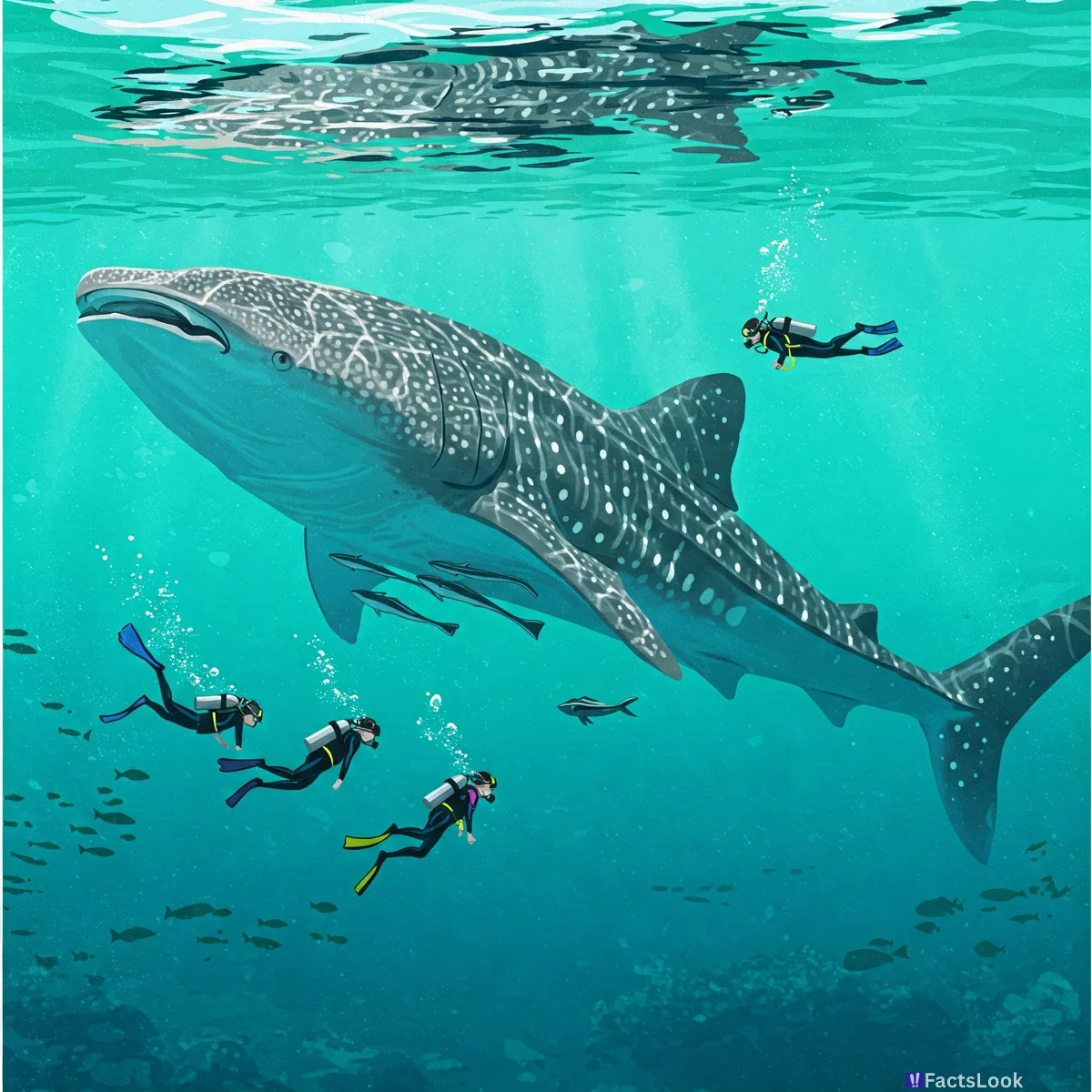
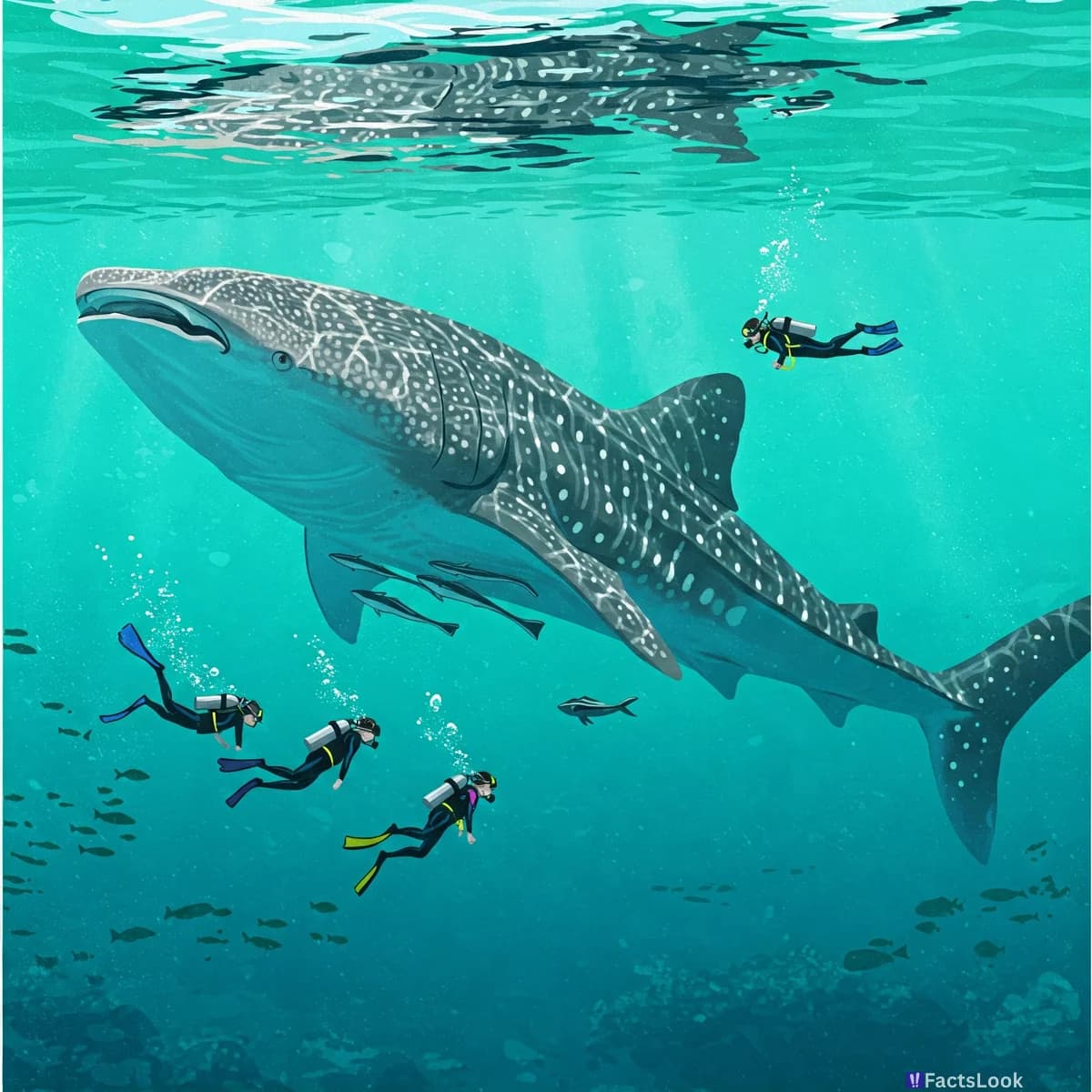
The whale shark is neither a whale nor a true shark in the predatory sense — it is a filter-feeding fish, the largest in the world, reaching up to 40 feet (12 metres) and 47,000 pounds. Despite the size, it eats almost exclusively plankton and small fish, straining them through gill rakers as it swims with its mouth agape. Whale sharks have distinctive spotted patterns on their skin that are unique to each individual — like fingerprints — and researchers use these to build photo-ID catalogues of their movements across ocean basins. Juveniles are born in deep coastal waters and gradually move into open ocean as they grow, a migration pattern that makes them particularly vulnerable to targeted fishing in nursery grounds.
Whale Facts: Common Questions Answered
What is the loudest animal on Earth? The sperm whale. Its echolocation clicks can reach 230 decibels — louder than a jet engine taking off.
How long can whales hold their breath? The record belongs to a Cuvier's beaked whale at 3 hours and 42 minutes (recorded 2020). Most large whales hold their breath for 30–90 minutes during routine dives.
How long do whales live? Bowhead whales are the longest-lived mammals, confirmed at 200+ years. Most other large whale species can reach 80–100 years.
How much milk do whale calves drink? Some calves consume up to 50 gallons (190 litres) per day, gaining up to 200 pounds weekly during peak nursing.
Are whales endangered? It varies by species. The vaquita is functionally extinct with fewer than 20 individuals left. North Atlantic right whales number fewer than 360. Blue and humpback populations have recovered significantly from historical whaling lows, thanks to international protection. The IUCN lists several species as Critically Endangered, Endangered, or Vulnerable.
What do whales eat? Baleen whales eat krill and small schooling fish — a single blue whale can consume 4 tons of krill per day during peak feeding season. Toothed whales eat squid, fish, and in the case of orcas, seals, penguins, and even other whale species.
How You Can Help Whales
Whales face a gauntlet of threats beyond whaling: ship strikes, plastic pollution, ocean noise that drowns out their communication, microplastics in their food chain, and bycatch in fishing gear. Here are three concrete actions worth knowing about:
- Choose sustainable seafood — certifications like MSC (Marine Stewardship Council) help reduce bycatch and habitat damage that directly affect whale prey populations.
- Reduce ocean plastic — whales ingest microplastics that accumulate up the food chain. Less single-use plastic in circulation means less in the ocean.
- Support organisations on the front line — NOAA Fisheries monitors whale populations and responds to strandings; the Whale Conservation Alliance advocates for stronger international protections; and the Viva Vaquita campaign directly funds enforcement against illegal gillnet fishing in the Gulf of California.
Subscribe to our newsletter for a regular dose of fascinating facts! Know a fact we missed? Drop it in the comments with your source.