 FactsLook
HIV Prevention: Why New Strategies Are Emerging

Why HIV Prevention Just Got Rewritten
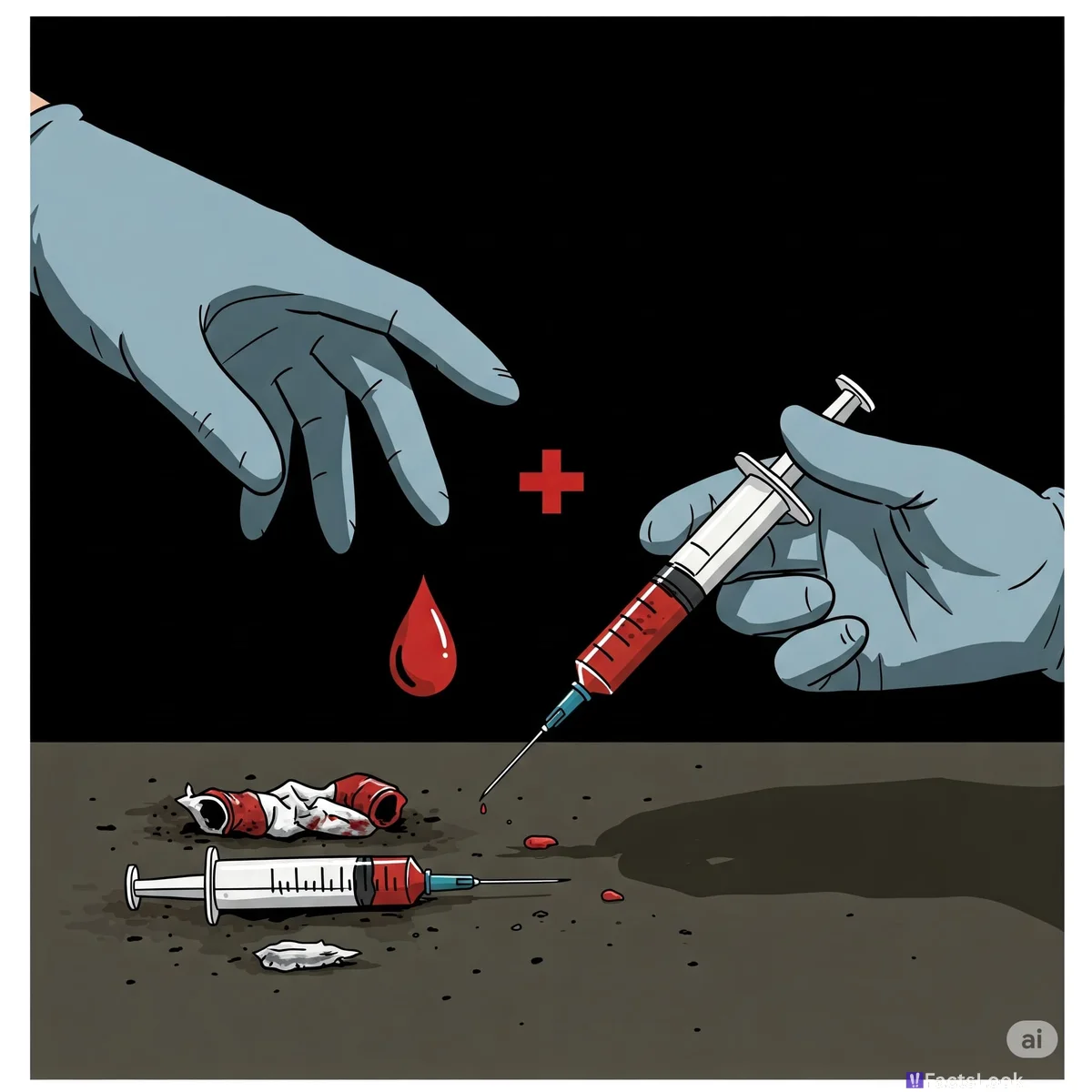
HIV prevention in 2025: a twice-yearly shot just changed the playbook.
For roughly 30 years, the prevention toolkit was a daily pill, condoms, and the right clinic. That model is being quietly dismantled.
In mid-2024, a single trial reported zero new HIV infections in thousands of women given a shot twice a year. By June 2025, the FDA had approved it.
The next 25 items walk through what changed, what's still solid, and where the science is heading — and yes, the lede is in there.
Lenacapavir Cut New HIV Cases to Zero in a 2024 Trial
In PURPOSE-1, none of the 2,134 South African and Ugandan women assigned to twice-yearly lenacapavir acquired HIV.
Background incidence in that population was about 2.0 per 100 person-years, so the implied efficacy exceeds 99%. In plain terms: a shot you get at the pharmacy twice a year outperformed the best daily PrEP pill on the planet. (NEJM, 2024)
PURPOSE-2 Confirmed Lenacapavir Works in Men and Gender-Diverse People
The follow-up PURPOSE-2 trial enrolled more than 3,000 cisgender men and transgender and nonbinary participants across four continents.
HIV incidence on twice-yearly lenacapavir was 0.10 per 100 person-years — about 89% lower than background. Two near-zero results, two different populations, same drug. That's the pattern regulators look for.
The FDA Approved Lenacapavir (Yeztugo) for PrEP in June 2025
On June 18, 2025, lenacapavir became the first and only FDA-approved HIV prevention option offering six months of protection in a single shot.
The CDC followed with clinical guidance recommending it for adolescents and adults at risk. It's marketed as Yeztugo in the US; WHO guidelines dropped on July 14, 2025.
Long-Acting Injectable Cabotegravir (Apretude) Is Now Standard of Care
Apretude, an injectable form of the integrase inhibitor cabotegravir, was FDA-approved in December 2021 and is given as a buttock shot every 8 weeks.
In the registrational HPTN 083 and 084 trials, cabotegravir cut HIV incidence by 66% in cisgender men and transgender women and 89% in cisgender women, compared with daily oral PrEP. The benefit comes from a brutally simple idea: you can't forget a dose you only have to remember twice a year. (The Lancet HIV, 2024)
Daily PrEP Is Still Over 99% Effective — When It's Actually Taken
Research suggests oral PrEP with tenofovir/emtricitabine (Truvada) or tenofovir alafenamide/emtricitabine (Descovy) reduces HIV risk by about 99% in men who have sex with men and 74–93% in heterosexual populations when adherence is high. (CDC PrEP, 2021)
"99% effective" is a real number, not marketing — but it assumes an adherence rate that population studies peg at roughly 60–80%. Long-acting injectables close that gap by removing the daily pill from the equation.
U=U Is Now Backed by Hundreds of Thousands of Couple-Years
The U=U consensus is endorsed by more than 1,100 organizations across 105 countries, including the CDC, NIH, and UNAIDS. Three large PARTNER studies followed mixed-status couples for a combined 135,000 condomless sex acts — and recorded zero phylogenetically linked HIV transmissions when the partner with HIV had a suppressed viral load. (UNAIDS, 2023)
It is, statistically, the most overdetermined medical fact in HIV care. Yet stigma hasn't caught up — a 2024 Kaiser Family Foundation survey found 56% of Americans incorrectly believed HIV could be transmitted via kissing or sharing a drink.
mRNA HIV Vaccines Finally Elicited the Right Antibodies — in Humans
Two first-in-human trials reported in 2024–2025 showed that Moderna's mRNA-1644 and IAVI/Scripps' mRNA-eOD-GT8 60mer could teach B cells to produce broadly neutralizing antibodies (bNAbs) against HIV. The IAVI G002 phase-1 study, published in Science in 2025, was the first to show the priming step works in people. (Scripps, 2025)
It's not a vaccine yet — those antibodies still need boosting, and protection trials are years out. But the 30-year puzzle of "why can't we make an HIV vaccine?" just got its first convincing human answer.
DoxyPEP Cuts Bacterial STIs by More Than Half
In June 2024, the CDC published its first-ever clinical guideline endorsing doxyPEP: a 200 mg dose of doxycycline taken within 72 hours after condomless sex.
Pooled trial data suggest roughly a 70%+ drop in syphilis and chlamydia and about a 50% drop in gonorrhea among men who have sex with men and transgender women. DoxyPEP isn't an HIV drug, but it matters because every ulcer from untreated syphilis is a door HIV walks through.
PEP Still Works — but Only if You Show Up in 72 Hours
Post-exposure prophylaxis is a 28-day course of three antiretroviral drugs started within 72 hours of a high-risk exposure. The CDC estimates PEP can reduce HIV acquisition risk by more than 80% when taken correctly. (CDC PEP, 2023)
A US emergency-department study found the median time to first PEP dose was 29 hours — meaning many people just barely make the window. Long-acting injectables are now being studied as a PEP alternative, with a phase-2 cabotegravir-PEP trial reporting favorable pharmacokinetics in 2024.
Antibody-Mediated Prevention Just Had Its Biggest Human Test
The Antibody-Mediated Prevention (AMP) trials, run by the HIV Prevention Trials Network, tested whether infusing the broadly neutralizing antibody VRC01 could prevent HIV acquisition. Results, published in 2021 and followed up through 2024, showed the antibody blocked only the virus strains it was engineered against — confirming both the promise and the limits of bnAb-based prevention.
Long-term follow-up is feeding into combination bnAb strategies and gene-therapy approaches designed to make a person's own immune cells pump out HIV-blocking antibodies.
Treatment as Prevention Has Quietly Eliminated Transmission in Several Cohorts
When a person with HIV starts ART and reaches a viral load below 200 copies/mL, transmission risk through sex drops to effectively zero — the basis of TasP. A 2024 real-world cohort of more than 350,000 people on ART in the UK reported zero phylogenetically linked transmissions over 12 years of follow-up. (NEJM HIV ID Observations, 2024)
TasP is the bedrock the new PrEP options are built on. Injectable lenacapavir for prevention is the same molecule already used to treat multidrug-resistant HIV since 2022.
At-Home Oral HIV Self-Tests Now Include Adolescents
The OraQuick HIV Self-Test — a 20-minute oral-fluid swab — has been FDA-approved since 2012 and was the first over-the-counter HIV test in the US. In December 2024, the FDA extended approval to include adolescents aged 14 and older. (OraSure, 2024)
Rapid antibody-only tests carry a 23–90 day window period post-exposure. For earlier detection, a fourth-generation lab test (antigen + antibody) closes that window to 18–45 days. (CDC testing, 2023)
Mother-to-Child Transmission Has Been Pushed Below 1% — When ART Is Used
Research suggests that with consistent antiretroviral therapy during pregnancy, delivery, and breastfeeding, vertical transmission rates fall to under 1% in high-income settings. WHO's 2023 update on triple-drug ART for pregnant people reinforced dolutegravir-based regimens as first-line. (WHO, 2023)
That's a striking number when you consider that, without intervention, transmission rates are 15–45%. Sub-Saharan Africa still accounts for roughly 65% of all new pediatric HIV infections. (UNAIDS, 2024)
Injectable HIV Treatment (Cabenuva) Is Reshaping Prevention Discussions
Cabenuva, a long-acting injectable combo of cabotegravir and rilpivirine, was approved in 2021 for HIV treatment and is given as a shot every one or two months. By 2024, the drug's safety record across more than 50,000 patient-years supported its use as a maintenance option.
Why it matters for prevention: when treatment is one shot every two months, adherence climbs — and adherence is the single biggest predictor of viral suppression, which in turn drives U=U.
PrEP Users Now Include Adolescents — the FDA Approved a Kid Formulation in 2024
In 2024, the FDA expanded Descovy approval to include adolescents weighing at least 35 kg, an important move given that roughly 1.7 million adolescents were living with HIV globally in 2023.
Pediatric and adolescent PrEP uptake remains low: WHO's 2024 estimate is fewer than 5% of eligible adolescents in high-burden countries have ever used PrEP. Long-acting options may be the breakthrough for this group.
Insurance Coverage of Long-Acting PrEP Is Still a Battlefield
In the United States, list prices sit at roughly $3,700 per Apretude dose and $14,000 per lenacapavir injection (twice yearly). Without insurance, the annual cost can exceed $22,000 for Apretude alone. (KFF, 2024)
The federal "Ready, Set, PrEP" program covers the drug cost for uninsured users, but the clinic-administered injection fee is often a separate charge. As of 2025, twelve state Medicaid programs and most private insurers cover at least one long-acting PrEP option.
The "Berlin Patient" Cure Story Has a Real Second Case
In 2022, a 53-year-old US man became only the fifth person — and arguably the first since Timothy Ray Brown — cured of HIV after a stem-cell transplant for leukemia, this time using umbilical-cord blood. The case was presented at CROI 2022 and followed up through 2024.
These cures rely on transplant donors with the CCR5-Δ32 mutation, which makes immune cells invisible to HIV. It's not a scalable cure, but it keeps the mechanistic question alive: if you can swap out the immune system, you can clear the virus.
Gene-Editing Trials for HIV Are Now in the Clinic
EBT-101, an in-vivo CRISPR-based therapy from Excision BioTherapeutics, completed a phase-1/2 trial in 2024. While efficacy data are limited, no serious adverse events were reported, and the trial cleared the way for next-generation gene-editing studies. (Excision, 2024)
The strategy: snip HIV DNA out of infected cells, or disable CCR5 so HIV can't enter new ones. Both approaches are years from clinical use — but the fact that they're in human trials at all is the headline.
Long-Term HIV Survivors Face a Comorbidity Profile That Looks Like Accelerated Aging
A 2024 Lancet HIV analysis of more than 10,000 long-term survivors in the US and Europe found significantly elevated rates of cardiovascular disease, neurocognitive decline, and certain cancers — even among those with sustained viral suppression.
The chronic-inflammation mechanism behind that pattern is similar to what drives the long-term harms described in our obesity hidden-risks breakdown. Each prevented HIV infection is a life spared decades of multi-drug regimens and chronic inflammation management.
Self-Testing Strips Are Catching On in the Global South — and Reshaping the Curve
WHO prequalified the first HIV self-test in 2017. By 2024, more than 100 countries had policies supporting self-testing, and more than 6 million self-tests were distributed in sub-Saharan Africa alone.
The signal: when testing takes 20 minutes and lives in a closet, the share of people who know their HIV status climbs by 10–15 percentage points in pilot programs. You can't link anyone to PrEP if you haven't linked them to a test first.
Stigma Has a Measurable Impact on PrEP Uptake — and on Viral Load
A 2023 meta-analysis in the Journal of the International AIDS Society found that internalized stigma reduced PrEP persistence by 47% across 18 studies. Among people with HIV, stigma was associated with a 1.7-fold higher odds of detectable viral load.
It's a tight feedback loop: stigma suppresses testing, testing suppresses diagnoses, missed diagnoses suppress viral suppression, and unsuppressed virus sustains transmission. For more on how chronic stress reshapes the body, see our piece on how stress changes your brain.
Harm Reduction Cuts the Other Big Transmission Route by Half
A 2024 Lancet review of syringe-services programs found that people who inject drugs who use SSPs are roughly 50% less likely to acquire HIV than those who don't.
Yet only 7% of people who inject drugs live in countries with high coverage of needle-and-syringe programs. In the US, federal funding for SSPs has been blocked at the state level in 15 states as of 2025. The same needle-and-syringe logic that cut HIV transmission is now being applied to the overdose crisis, with naloxone distribution at the same sites.
Co-Infections Are the Hidden Driver of HIV Risk in 2025
WHO's 2024 tuberculosis report noted that people with HIV are 16 times more likely to develop TB, and TB remains the leading cause of death among people with HIV globally. STI co-infections like syphilis increase HIV acquisition risk 2–5x.
The DoxyPEP rollout, better HCV cures, and rising syphilis rates all intersect here. Modern HIV prevention is no longer just about one virus — it's about the network of infections that make HIV transmission easier.
Combination Prevention Is the Real Strategy — No Single Tool Is Enough
UNAIDS' 95-95-95 targets — 95% of people with HIV diagnosed, 95% of those on ART, 95% of those virally suppressed — depend on layering PrEP, U=U, harm reduction, and testing. None of the new tools (lenacapavir, Apretude, mRNA vaccines) replaces that stack. (UNAIDS, 2024)
The 2024 global update reports 86% of people with HIV knew their status, 89% of those were on treatment, and 93% of those were virally suppressed — meaningful progress, but not enough to end the epidemic.
The Real-World Payoff: Where HIV Prevention Stands in 2025
Pull the 25 facts above into one picture: a twice-yearly shot, a long-acting injection, a daily pill when you can take it, treatment-as-prevention, and self-tests you can buy at a pharmacy. The prevention stack is wider, stickier, and harder to forget than at any point in the last 30 years.
The bottleneck is no longer the science — it's access, cost, and the stigma that still keeps roughly 56% of Americans from understanding how HIV actually spreads. The new tools matter most if they reach the people whose current prevention plan is "I'll try to remember the pill."
FAQ: Quick Answers About HIV Prevention in 2025
How much does PrEP cost in the US?\nResearch suggests generic oral PrEP is free for most insured patients and free under the federal "Ready, Set, PrEP" program for uninsured people who qualify. Apretude injections cost roughly $3,700 per dose, and lenacapavir costs about $14,000 per dose (twice yearly). (KFF, 2024)\n\nIs lenacapavir available yet?\nYes — the FDA approved it for HIV PrEP on June 18, 2025, and Gilead is scaling up access through its voluntary licensing program in 120 high-incidence, resource-limited countries.\n\nWhat's the side-effect profile of long-acting PrEP?\nResearch suggests Apretude's main side effects are injection-site reactions (pain, nodules) reported in about 80% of trial participants, mostly mild. Lenacapavir's most common adverse events are injection-site reactions and headache. (FDA Apretude label, 2024)\n\nHow long after exposure can a test detect HIV?\nFourth-generation lab tests can detect HIV 18–45 days post-exposure; rapid antibody-only tests take 23–90 days. Nucleic acid tests close the window to about 10–33 days. (CDC testing, 2023)\n\nDoes U=U really work?\nYes. Three PARTNER studies followed mixed-status couples for a combined 135,000 condomless sex acts without a single genetically linked transmission when the partner with HIV was virally suppressed. (UNAIDS, 2023)\n\nWhere can I get tested?\nIn the US, free at-home tests are available via GetTested.cdc.gov. Globally, the WHO distributes self-tests through national HIV programs in 100+ countries.\n\nSubscribe to our newsletter for a regular dose of fascinating facts! Know a fact we missed? Drop it in the comments with your source.