 FactsLook
Your City Is a Heat Island: 15 Facts About Urban Heat — Causes, Risks, and What Cities Are Doing
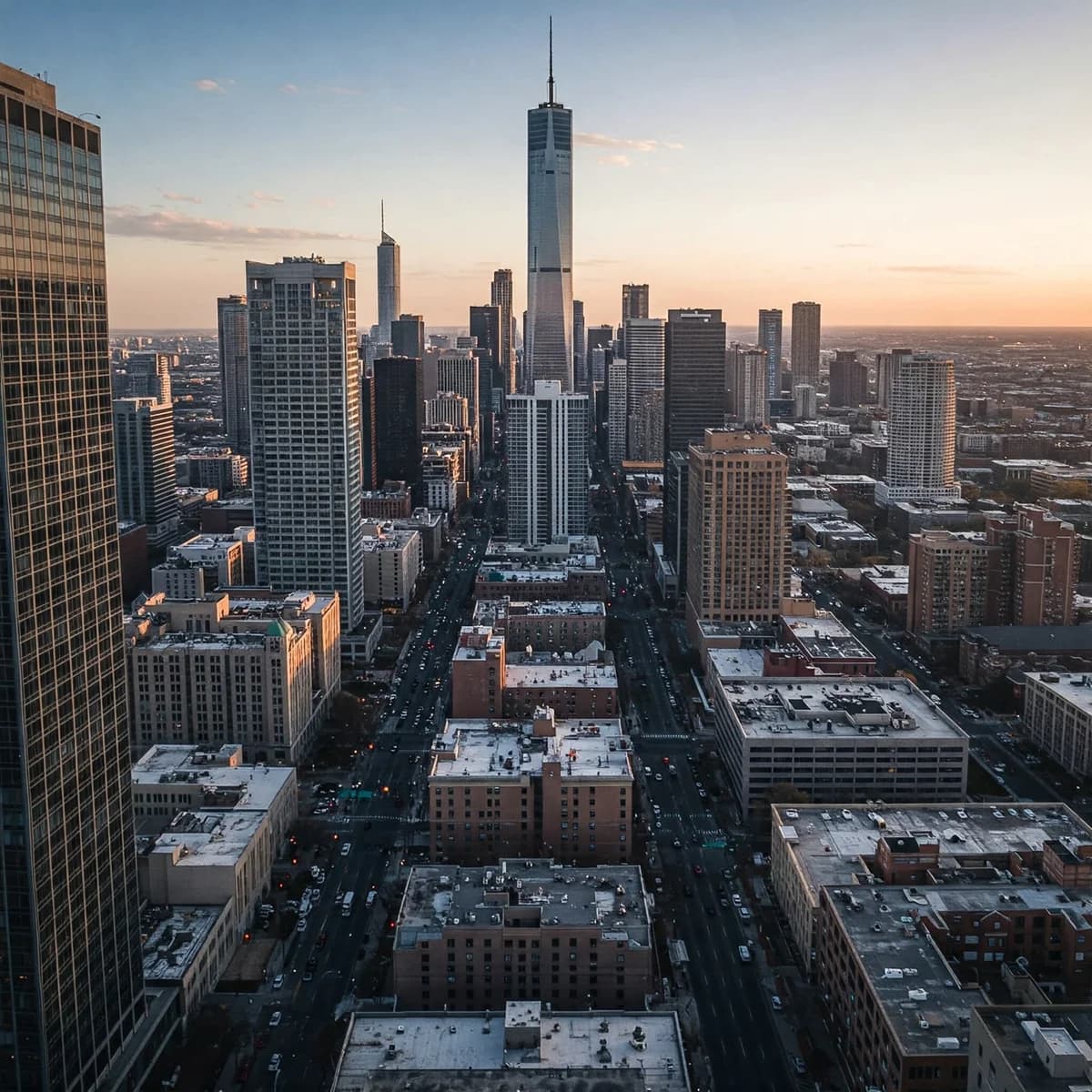
Why your city is hotter than the countryside — and why it's getting worse
On a summer night, the countryside cools down. Your city doesn't. That's not your imagination — it's a documented physical phenomenon called the urban heat island effect. Concrete, asphalt, and steel don't just absorb sunlight; they hold it and radiate it back as warmth long after sunset, meaning city residents lose the overnight recovery window that rural dwellers rely on to sleep and reset. As cities densify and green cover shrinks, the temperature gap between urban cores and surrounding areas grows year over year. A 2021 EPA analysis of 159 U.S. cities found that the median urban-rural heat gap was 1.5°F (0.8°C), but on calm, clear summer nights it regularly exceeds 22°F (12°C) in the largest metropolitan areas — the same magnitude of warming that climate change is projected to add to entire regions by 2100. Here are 15 facts that explain what's happening, who's most at risk, and what cities are doing about it.
Asphalt parking lots are heat generators in disguise
A single surface parking space — roughly 9 by 18 feet — absorbs enough solar energy to heat a 1,500-square-foot house for an hour in direct summer sun. Multiply that across a city and you've built a vast network of solar collectors that all dump heat into the surrounding air. Dark rooftops make the problem worse: NASA satellite data shows urban rooftops can reach 150–170°F (66–77°C) on 90°F (32°C) summer days, while nearby suburban lawns stay closer to 85°F (29°C). That rooftop heat drives thermal convection above cities, shaping local wind patterns and trapping pollutants in the urban boundary layer — one reason heat waves in cities feel progressively worse than temperature readings alone would suggest.
Trees are the original air conditioning — and cities are running out of them
A mature tree produces the cooling effect of 10 room-sized air conditioners running 20 hours a day, through a combination of shade and evapotranspiration. The catch: tree canopy is not distributed evenly. Wealthier neighborhoods in most major cities have 30–40% more tree cover than lower-income areas, which means the residents who most need relief often live in the hottest, most pavement-dense blocks. When those trees are removed — for construction, storm damage, or simple neglect — the cooling effect disappears, but the underlying asphalt doesn't. Replacement takes decades; loss can happen in days. This inequity shows up across many environmental issues, not just heat — pollution exposure, flood risk, and air quality all follow similar patterns of historical underinvestment.
Concrete canyons amplify heat between buildings
Urban canyons — narrow streets flanked by tall buildings — trap longwave radiation like a thermal fly trap. Sky view factors drop sharply: in dense downtown corridors, buildings may only see 15–25% of the open sky, meaning heat emitted from surfaces gets reflected and re-absorbed by neighboring walls instead of escaping upward. This is why urban heat intensity scales with density and building height in ways that surprise many planners. Singapore addressed this with mandatory building setbacks and sky exposure ratios; some cities now require microclimate modeling before approving tall structures near residential neighborhoods.
Air conditioning makes city-level heat worse, not better
For every watt of cooling your AC unit delivers to your living room, it dumps roughly another watt of waste heat directly onto the street outside your window. Multiply that across millions of households and commercial buildings during a heat wave, and you've effectively turned the city itself into a massive heat emitter. In Tokyo, HVAC systems already account for an estimated 30–40% of urban heat load during peak summer demand. The solution isn't to abandon air conditioning — it's to require waste heat recovery, improve building insulation, and invest in passive cooling infrastructure that reduces demand in the first place.
Heat kills more Americans than any other weather-related cause — and the toll is accelerating
The CDC estimates that extreme heat causes roughly 1,300 deaths per year in the United States, a figure researchers widely consider an undercount due to how heat deaths are recorded on death certificates. Compare that to roughly 90 fatalities per year from tornadoes and 80 from hurricanes. When the 2021 Pacific Northwest heat dome hit — an event scientists called "virtually impossible" without climate change — Seattle recorded 619 excess deaths in a single week, more than tripled its previous annual heat death record. The 2024 Lancet Countdown report found that heat-related mortality among people over 65 has increased by approximately 85% between 2000–2004 and 2017–2021 — one of the starkest signals in the entire climate-health literature. Research suggests sustained heat stress also accelerates cognitive decline and neurological damage, compounding the mortality toll over time.
Low-income and minority neighborhoods bear the worst of it
Heat vulnerability isn't distributed randomly — it's layered on top of existing inequalities in housing quality, access to green space, air conditioning ownership, outdoor occupational exposure, and pre-existing health conditions. In Chicago, the 1995 heat wave killed roughly 700 people in five days, and the death toll was overwhelmingly concentrated in the city's poorest, most African American neighborhoods. Decades later, a 2020 analysis published in Nature Communications found that historically redlined neighborhoods in 202 American cities were still significantly hotter than non-redlined areas, with a median difference of 2.6°C (4.7°F). The mechanism is straightforward: those neighborhoods were deliberately underinvested in green infrastructure, and that legacy shows up in the temperature record today — much as plague-era policy decisions shaped Europe's trajectory for centuries.
Heat islands turn up overnight — and that's where the real danger lives
Heat becomes life-threatening not just when it's hot in the afternoon, but when nighttime temperatures stay elevated. Under normal conditions, your body recovers from daytime heat stress during the cool overnight hours. In a heat island, that recovery window closes. The human body can tolerate daytime heat if nights are cool; it struggles to survive consecutive days of elevated minimum temperatures, especially for elderly residents, people with cardiovascular conditions, and those without air conditioning. Phoenix, Arizona — which recorded over 600 heat-associated deaths in 2023 alone — has invested heavily in cooling centers, but those require residents to know about them and have transportation to reach them. Neither is guaranteed for the city's most vulnerable.
Children and outdoor workers face disproportionate risk
Children's bodies heat up faster than adults' and dissipate heat less efficiently — their surface-area-to-mass ratio means faster core temperature rise in hot conditions. Yet schoolyards are overwhelmingly paved and lack shade. Outdoor workers — construction crews, agricultural laborers, delivery drivers, landscapers — face heat exposures 4–6 times higher than indoor workers, and occupational heat stress kills an estimated 30 workers globally every day, according to the WHO. Heat illness is preventable with rest breaks, hydration, and shade — the problem is enforcement. In the United States, there is still no federal heat stress standard for outdoor workers, leaving millions without mandatory protections.
Air quality and heat form a dangerous feedback loop
Heat accelerates the chemical reactions that produce ground-level ozone — the main ingredient in smog. Higher temperatures mean faster ozone formation, higher concentrations, and longer exposure seasons. By mid-century, ozone-related premature deaths are projected to increase 2.4% for every 1°C of warming. Meanwhile, particulate matter from diesel vehicles and industrial sources penetrates deeper into lung tissue when inhaled during heat-exercise conditions, compounding cardiovascular and respiratory stress. Cities that have successfully reduced air pollutants — Los Angeles being a prominent example — are now finding that ozone reductions lag temperature-driven increases in formation chemistry. The compounding effect shows up across health topics: just as secondhand smoke exposure is far more dangerous for children in high-heat environments, urban air pollution becomes more lethal when temperatures climb.
Power grids crack under peak heat demand — and then people die
Air conditioning demand during heat waves can spike electricity consumption by 50–70% above normal summer baselines, pushing power grids to their limits. When grids fail — as they did during the Texas winter disaster of 2021 and multiple California heat waves in 2022 and 2023 — air conditioning units go dark in the worst possible conditions. Rolling blackouts during heat waves aren't just inconvenient; they are lethal events for medically vulnerable populations. Grid operators increasingly identify urban heat density as a load-forecasting challenge: neighborhood-level temperature spikes from heat islands can create localized demand surges that trip circuits even when the broader grid appears stable.
Tree canopy can cut neighborhood temperatures by 5–10°F — if it's done right
The science on green infrastructure cooling is robust. Studies in Leipzig, Germany found that streets with mature tree canopies measured up to 9°F (5°C) cooler than equivalent streets without trees. Street-level misting systems combined with shade structures can push that difference to 15°F. But tree planting without maintenance investment produces disappointing results: urban trees face compacted soil, root damage from paving, salt exposure, drought stress, and limited growing space. The cities getting the best results — Vienna, Medellín, and Singapore — treat urban forestry as infrastructure with dedicated budgets, not afterthought landscaping. Medellín, Colombia transformed from one of the region's hottest cities to a global green urbanism model largely through a systematic Green Corridors program that planted 900,000 trees and shrubs along 18 major roads.
Cool roofs and pavements are the fastest-acting urban cooling tools available
Retrofitting dark rooftops with reflective coatings — or replacing them with vegetation-covered "green roofs" — can reduce roof surface temperatures by 50–60°F (28–33°C) and cut building cooling energy use by 10–30%. Los Angeles, which recorded its hottest year ever in 2023, launched a Cool Streets program that applied reflective coating to over 200 lane-miles of road surfaces and installed shade structures at 100 key bus stops, targeting routes serving transit-dependent communities in historically hotter neighborhoods. The city aims to cool surface temperatures by 3°F across targeted areas. Similar programs in Chicago, New York, and Athens, Greece have demonstrated measurable neighborhood-level temperature reductions at relatively low cost compared to full green infrastructure overhauls.
Water features cool surrounding blocks — but the effect is more subtle than people expect
Fountains, urban streams, and vegetated waterfronts genuinely cool adjacent air through evaporation, but the effect is surprisingly localized. A large park fountain might cool the immediate 50-meter radius by a few degrees while having negligible impact a few blocks away. Larger bodies of water — urban lakes, restored rivers with riparian vegetation — can influence microclimate more meaningfully. Chicago's revitalized lakefront and Melbourne's Yarra River corridor restoration have been studied as examples where water-based green infrastructure delivers both cooling and biodiversity benefits. The lesson for city planners: water features work best as part of a broader green network, not as standalone cooling fixes.
Cities worldwide are rewriting building codes and planning rules around heat
The most durable heat island solutions are structural: changes to building codes, zoning rules, and planning standards that embed cooling into the urban fabric rather than treating it as an add-on. France now requires cool roof or solar panel installation on all new commercial buildings in a major national heat resilience push. Athens, Greece established mandatory shade requirements for new developments and created an urban albedo standard for city-owned surfaces after a 2021 heat wave killed over 1,300 people. Melbourne, Australia updated its planning scheme to require urban heat island impact assessments for major projects, similar to environmental impact requirements. These aren't pilot programs — they're becoming baseline expectations for urban climate resilience in a warming world.
What can I do about urban heat as a resident?
If you own property or garden, planting shade trees is the highest-impact individual action — mature trees are essentially free air conditioning for the surrounding block. Check local municipal shade tree programs; many cities offer free or subsidized trees for residential planting. Cool roofing and reflective surfaces on your own building reduce heat that radiates back into your home and your neighbors'. If you rent, advocate to your landlord about reflective coatings or exterior shade sails. And during heat waves, the single most impactful thing you can do for someone else is check on elderly or medically vulnerable neighbors — heat kills people who are isolated and unaware that their home has become dangerous. For more on extreme heat's effects on the human body, research into how stress changes the brain and body suggests that sustained thermal stress compounds existing health vulnerabilities in ways that mirror chronic psychological stress.
Does urban heat affect health beyond heat stroke?
Yes — and the scope is broader than most people realise. Extreme heat accelerates cardiovascular events: when core body temperature rises, heart rate increases to pump blood to the skin for cooling, placing strain on the heart even in otherwise healthy adults. Research published in the Lancet Countdown found that heat-related cardiovascular mortality among people over 65 increased 85% between 2000 and 2021. Heat also degrades air quality by boosting ground-level ozone formation — meaning your lungs work harder on the hottest days precisely when breathing is already more difficult. Pregnant women, outdoor workers, and people with kidney conditions face additional risks that compound in urban heat environments. The cascading health effects mean that heat isn't just a temperature problem; it's a systemic health stressor that amplifies existing vulnerabilities across the population.
Subscribe for more facts like this
Subscribe to our newsletter for a regular dose of fascinating facts! Know a fact we missed? Drop it in the comments with your source.