 FactsLook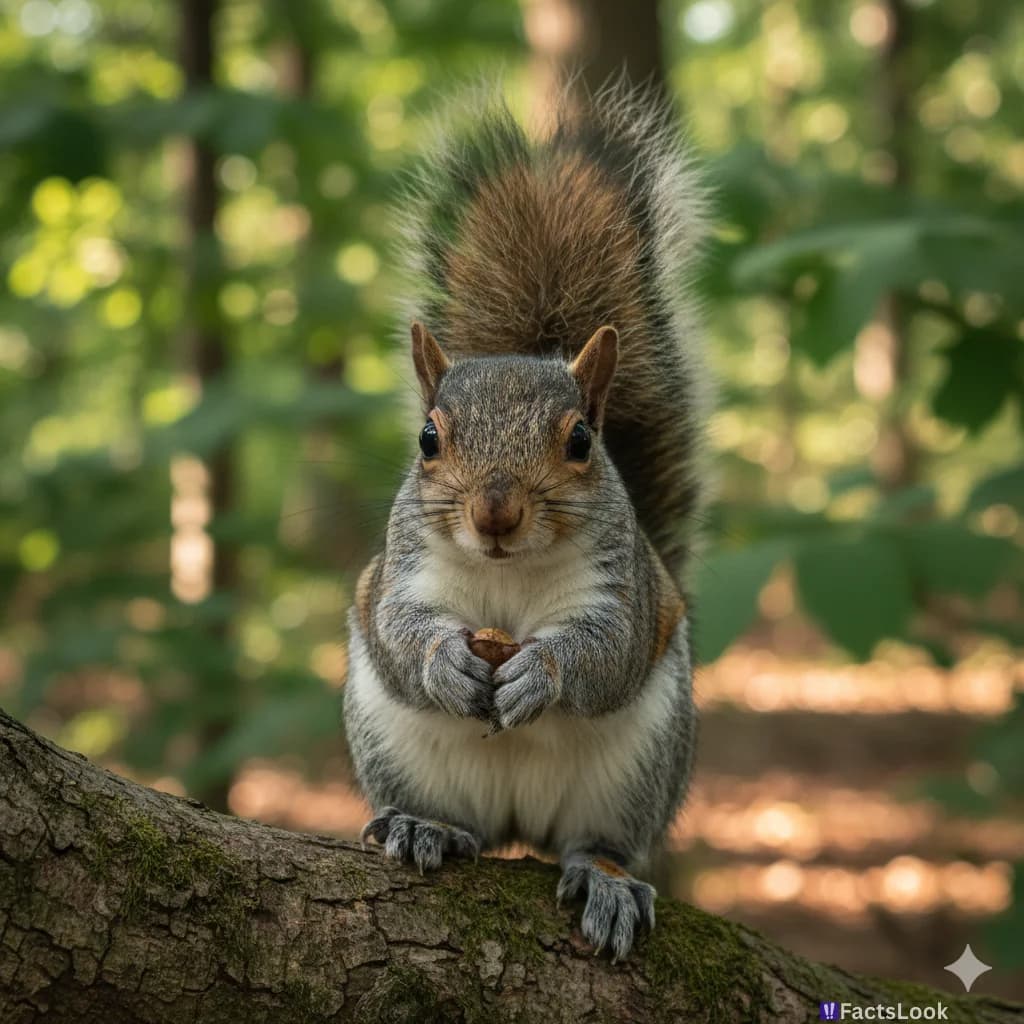
Here's a number worth remembering: 0.04%. That's the share of the 21,977 squirrels tested for rabies across a 15-year CDC study period who actually came back positive. For context, that's roughly 9 animals out of nearly 22,000 tested. Despite what the foaming-mouth zombie trope suggests, squirrels have never transmitted rabies to a human — not once, ever.
This matters because when one of these bushy-tailed acrobats shows up at your bird feeder, most people's first question is usually some version of "is that thing going to kill me?" The answer, reassuringly, is almost certainly no — though there's a lot more to squirrels than the backyard drama suggests.
Are Squirrels Really Rodents?
Yes — and not just in the colloquial "small rodent-like thing" sense.
Squirrels belong to the family Sciuridae, which also includes chipmunks, marmots, and flying squirrels. Like all rodents, they have a defining trait: continuously growing incisors that must be worn down through gnawing. Those front teeth never stop growing — up to 6 inches per year for a beaver's incisors, if you're curious. Squirrels keep theirs in check by nibbling on nuts, seeds, and, unfortunately, your home's siding.
Can Squirrels Get Rabies?
Technically, yes. Practically? Almost never.
The CDC reports that small mammals like squirrels, rabbits, and opossums are rarely found to be rabid. Their small body mass means they usually don't survive attacks from rabid predators long enough for the virus to develop and be transmitted.
According to research published in PMC covering 1995–2010, only 9 out of 21,977 squirrels tested were positive for rabies — a rate of 0.04%. The Utah Poison Control Center confirms that small mammals have never infected a human with rabies in the United States.
If you see a squirrel acting strangely — aggression, disorientation, visible illness — it's far more likely suffering from distemper, poisoning, or injury than rabies. Still, don't pet them.
What Do Squirrels Eat?
They're often labeled herbivores, but that's not quite accurate. Squirrels are omnivores — they just lean heavily toward plants.
Their natural diet includes:
- Nuts and seeds: Acorns, walnuts, hickory nuts, and sunflower seeds make up the bulk of their calories. They're scatter hoarders, burying thousands of caches each season.
- Fruits and berries: Apples, mulberries, and wild berries when available.
- Fungi: Mushrooms provide nutrients, and some species even store certain fungi to dry before eating.
- Bark and buds: Critical fallback food in winter when other sources dry up.
- Insects and eggs: Opportunistic protein sources, especially in spring when cached nuts are depleted.
Here's the surprising part: UC Davis documented California ground squirrels hunting and eating voles — the first scientific evidence of squirrels actively preying on vertebrates. Most species aren't carnivorous, but they're more flexible than the "nut collector" stereotype suggests.
Dangerous Foods: What Squirrels Cannot Eat
Just because something looks harmless doesn't mean it is.
Chocolate is a hard no. It contains theobromine, which is toxic to squirrels (and dogs, cats, and most other animals). Symptoms of poisoning include vomiting, tremors, and seizures.
Almonds carry a hidden risk. Raw almonds contain trace cyanide compounds that can accumulate with regular exposure. Your squirrel isn't going to die from one almond, but it's worth avoiding as a habit.
Grapes and raisins have been linked to kidney failure in dogs. The mechanism isn't fully understood in squirrels, and there's no reason to find out the hard way. If you want to offer fruit, stick to small pieces of apple or berries.
The broader principle: just because an animal will eat something doesn't mean it should. Squirrels have evolved with certain foods for a reason.
Are Squirrels Nocturnal?
Most common species — gray squirrels, fox squirrels — are diurnal. They're active during the day, sleeping in tree hollows or leaf nests (called dreys) at night.
Flying squirrels are the exception. They're primarily nocturnal, gliding through the canopy under cover of darkness. If you spot a squirrel after dark, it's probably a flying squirrel — and you're lucky to see one.
How Long Do Squirrels Live?
Wild squirrels face a gauntlet of predators, traffic, and harsh winters.
According to SUNY ESF, mean life expectancy for a gray squirrel at birth is just 1–2 years. Adults do better — around 6 years on average — but most don't reach that milestone.
The first year is the most dangerous. Predators like hawks, owls, snakes, and cats take a heavy toll. Vehicles claim many more. Those that survive their first winter often live to 8–10 years.
In captivity, with consistent food and no predators, squirrels regularly reach 10–15 years. Some have lived past 20.
Can You Keep a Squirrel as a Pet?
Please don't.
Most states prohibit keeping native wildlife without permits that are typically only issued to licensed wildlife rehabilitators. Even hand-raised squirrels retain wild instincts. They can be aggressive when frightened, inflict serious bites, and require specialized diets and space that typical homes can't provide.
If you find an injured or orphaned squirrel, contact a local wildlife rehabilitator rather than attempting domestic care.
Squirrel Ecology: The Forest's Tiny Engineers
Squirrels don't just live in forests — they actively create them.
By burying nuts and forgetting roughly 70–90% of their caches, squirrels have planted countless trees over millennia. Oak, hickory, and pine forests owe significant expansion to squirrel forgetfulness. It's one of those relationships where nature built a feedback loop: squirrels need forests, and forests need squirrels to spread.
This also makes them a critical food source for predators, connecting them to hawks, foxes, coyotes, and snakes in a food web that extends well beyond the backyard drama.
Frequently Asked Questions
Are squirrels good for anything?
Yes. Beyond their ecological role as forest regenerators, they serve as prey for numerous predator species, supporting biodiversity across many ecosystems.
What's the best thing to feed a squirrel?
Their natural diet: unsalted nuts in the shell (acorns, walnuts, pecans), sunflower seeds, small apple pieces, or corn on the cob. Avoid anything processed, sugary, or outside their evolutionary menu.
Do squirrels carry diseases other than rabies?
Yes. While rabies is essentially non-existent in squirrel-to-human transmission, squirrels can carry leptospirosis, tularemia, ringworm, and parasites like fleas and ticks. This is another reason to admire them from a distance.
How do squirrels find their buried nuts?
Two mechanisms: an excellent sense of smell and surprisingly detailed spatial memory. Studies show they can recall thousands of individual cache locations, though they do forget some — and that's how trees grow.
What's the average squirrel litter size?
Tree squirrels like gray squirrels typically have 2–4 offspring per litter, occasionally up to 6. Most species raise one or two litters per year, with breeding peaks in late winter and sometimes late summer.
Subscribe to our newsletter for a regular dose of fascinating facts! Know a fact we missed? Drop it in the comments with your source.