 FactsLook
From Protein Panic to Iron Deficiency: The Real Truth About Vegan Diets
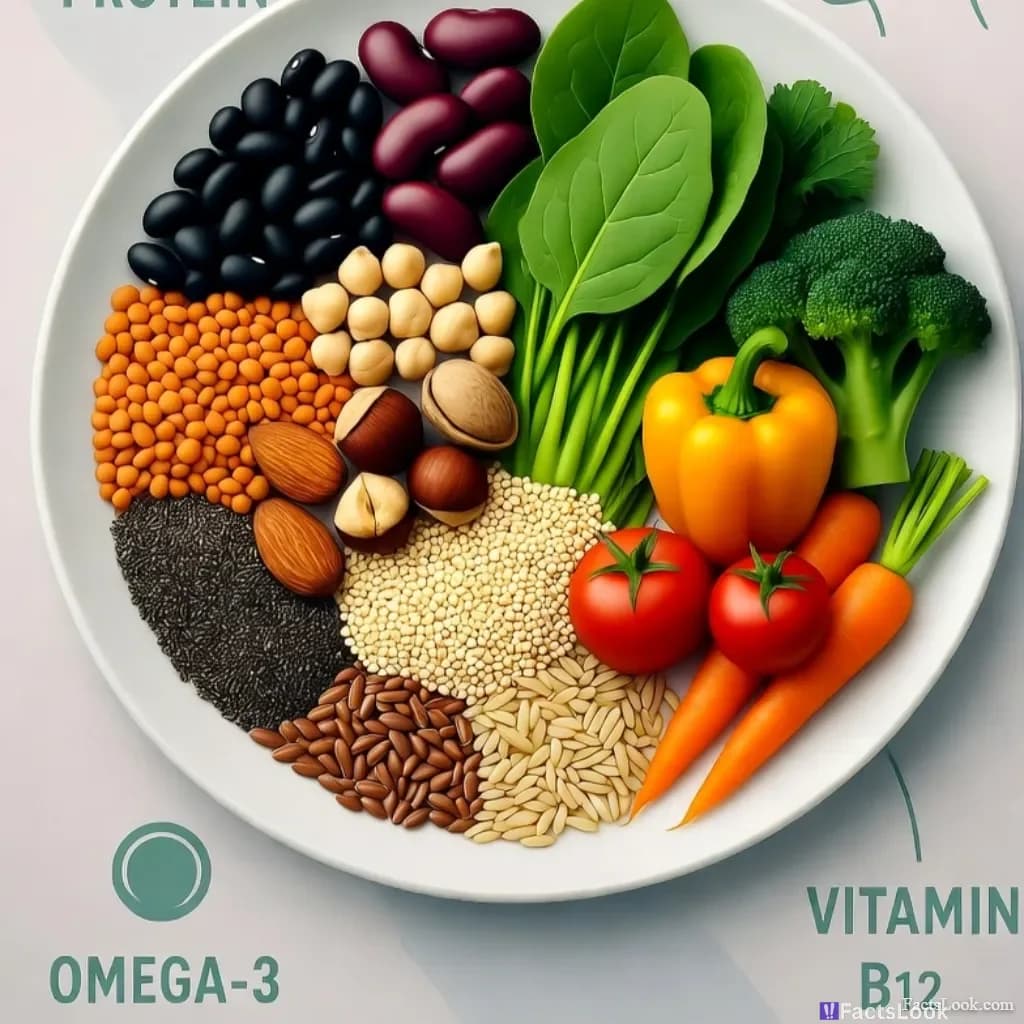
The One Fact Everyone Gets Wrong About Protein on a Vegan Diet
Here's something that stops people from going vegan before they even start: "Where do you get your protein?"
It's the most common question vegans hear. But here's the thing — a single cup of cooked lentils delivers 18 grams of protein at around 230 calories. That's more protein per calorie than most cuts of beef. Add quinoa, tofu, and tempeh to the mix, and hitting your protein targets on a fully plant-based diet takes no special effort.
The Academy of Nutrition and Dietetics has stated since 2016 that appropriately planned vegan diets are "healthful, nutritionally adequate, and appropriate for all stages of the life cycle, including pregnancy, lactation, infancy, childhood, adolescence, older adulthood, and for athletes." That includes protein.
Can You Build Muscle on 100 Grams of Plant Protein a Day? Science Says Yes
Here's a counterintuitive fact: a 2024 University of Illinois study found no significant difference in muscle protein synthesis between omnivores and vegans consuming 1.6–1.8 grams of protein per kilogram of body weight daily. Researchers took muscle biopsies. The results were clear.
Plant protein works. Athletes like Venus Williams, Patrik Baboumian, and Morgan Mitchell have built elite performance on entirely plant-based diets. A 2025 meta-analysis in the Scandinavian Journal of Sports Science found no significant differences in strength or athletic performance between plant-based and omnivorous athletes.
The key is hitting your total daily protein and spreading intake across the day — the same rule that applies to any athlete, plant-based or otherwise. If you're lifting and eating enough, the source matters less than most people think.
Q: Do Vegans Really Become Iron Deficient? A: Only If They Ignore One Simple Pairing
The fear goes like this: plant iron (non-heme) isn't absorbed as well as animal iron (heme), so vegans must become deficient.
The reality is more nuanced. According to NIH data on iron, plant-based iron absorption is enhanced dramatically when paired with vitamin C — the exact thing most plant-eaters already do. A study in the American Journal of Clinical Nutrition (2002) showed that vitamin C can double non-heme iron absorption.
What this means in practice: a black bean burrito with salsa, a lentil soup with a squeeze of lemon, or oatmeal with strawberries aren't just tasty combinations. They're strategic ones. Chickpeas, spinach, pumpkin seeds, and fortified cereals all provide iron — the absorption is the variable you control with what you eat alongside them. For context, the recommended daily intake for women is around 18 mg, and a cup of cooked lentils delivers about 6.5 mg, easily sustained across multiple meals.
The One Supplement Every Vegan Actually Needs — and Why It's Not Optional
Here's where the conversation around vegan nutrition gets serious: B12 is not made by plants. It's not made by animals either — animal B12 comes from bacterial fermentation, which is why cattle get supplements. Vegans who skip B12 supplementation are the only group with a clinically documented deficiency risk that's directly tied to their diet.
The solution is straightforward. Fortified foods — nutritional yeast, plant milks, breakfast cereals — cover most of your needs. The Vegan Society recommends 10 micrograms of B12 daily via supplement or fortified food. That's it. Not complicated.
What happens without it is less fun: fatigue, nerve damage, and in severe cases, irreversible neurological impact. With it — normal B12 levels, fully preventable. This is the one non-negotiable on a vegan diet, and it's solved with a pill or a bowl of fortified cereal.
The Heart Disease Statistic That Should Change How You Think About Plants
Harvard's School of Public Health published a large 2024 study finding that people who ate more plant-based proteins than animal proteins had the lowest cardiovascular risk of any group studied. That's a direct quote worth sitting with.
Separately, UCI's 2024 meta-analysis found that vegetarian and vegan dietary patterns were associated with a 15% relative risk reduction in cardiovascular disease incidence. A JAMA Internal Medicine meta-analysis also found vegan diets reduced LDL cholesterol by 20–30% compared to omnivorous controls.
The mechanism is straightforward: no dietary cholesterol from plants, high fiber, lower saturated fat. Your arteries notice.
The connection between diet and heart disease runs parallel to what researchers have found about environmental toxins and cardiovascular harm — in both cases, the body responds to what we expose it to over time. And here's a non-obvious bonus: omega-3s from algae oil give you EPA and DHA without the fish, or the mercury, which meat-eaters can't say.
Q: Do Vegans Actually Weigh Less? A: The Numbers Say Yes — By About 5–10 Pounds
The stereotype of the frail, underweight vegan and the burly omnivore isn't supported by population data. A meta-analysis in Obesity Reviews (2016) found that on average, vegans weighed 5–10 pounds less than their omnivorous counterparts.
The reason isn't complicated: whole plant foods are less calorie-dense than processed meats and dairy. Fiber fills you up before you overconsume. And when you swap a beef burger for a black bean burrito, you're making a substitution that matters in both directions — fewer calories, more nutrients per bite.
That's not to say vegan = automatically thin. Oreos are vegan. But the structural advantage of high-fiber, low-energy-density eating is real, and the data reflects it. If you're managing weight, the question isn't whether plants help — it's which plants you're choosing.
The Diabetes Numbers That Statisticians Keep Coming Back To
Research published in Diabetes Care (2024) found that plant-based diets reduced the risk of developing type 2 diabetes by up to 34%. That's a number worth putting in front of people who think veganism is a fringe diet.
The mechanism is equally interesting: low-glycemic foods like berries, lentils, and whole grains stabilize blood sugar in ways that meat and refined carbs simply don't. Swap a chicken thigh for tempeh in a stir-fry, and you're making a measurable change in how your body manages glucose.
One more counterintuitive angle: it's not all-or-nothing. The research suggests partial shifts matter too. Swapping two meat-based meals per week for plant-based ones shows measurable improvements in insulin sensitivity. You don't have to go fully vegan to reduce your diabetes risk.
Your Gut Has 100 Trillion Microbes. The Foods They Love Most Are All Vegan
Here's a fact with scale that sticks: your gut contains roughly 100 trillion bacteria — more than ten times your body's human cells. And what those bacteria eat matters enormously for your immune function, mood, and inflammation levels.
Plant-based fiber is their primary fuel. A vegan diet delivers 30–50 grams of fiber daily from fruits, vegetables, legumes, and whole grains — more than double what most Western omnivores consume. A study published in Gut (2015) found that vegan gut microbiomes showed significantly higher counts of protective species and lower levels of inflammatory markers compared to omnivores.
The practical implication? Fermented foods like kimchi, sauerkraut, and miso add probiotic diversity on top of that fiber base. The gut health case for plants is one of the most evidence-backed in nutrition science.
For more on the microbial life that shares your body — and how deeply strange it gets — the deep-sea creatures post covers where some of the ocean's most extraordinary microbiomes live.
Chronic Inflammation Drives Most Modern Disease. Plants Quiet It Down.
Chronic low-grade inflammation is now understood as a driver of heart disease, type 2 diabetes, depression, and possibly Alzheimer's. One meta-analysis in Nutrition Reviews (2017) found that plant-based diets reduced inflammatory markers by roughly 30% on average.
The mechanism: antioxidants and polyphenols in berries, turmeric, leafy greens, and legumes neutralize free radicals that drive inflammation. Curcumin from turmeric — shown in multiple trials to reduce inflammation — is bioavailable in small amounts but works synergistically with the broader matrix of a whole-food plant diet.
One more angle worth knowing: the anti-inflammatory power of plants doesn't require you to eat any single superfood. It comes from the cumulative effect of consistently choosing whole plants over processed foods and refined sugars. Variation is the strategy — and in both inflammation and chronic stress, what you consistently expose your body to shapes the outcome.
The Cost Comparison That Changes When You Think About Protein Per Dollar
Vegans hear it constantly: "But meat is cheaper!" The truth depends on what you're measuring. A USDA comparison of meal costs found that plant-based proteins — lentils, beans, tofu — deliver more protein per dollar than most animal proteins when you normalize for cost and nutritional output.
Lentils cost around $1–2 per pound, cook in under 30 minutes, and yield 18 grams of protein per cooked cup. A comparable protein serving of beef costs 3–5 times more. The staples of a vegan diet — rice, oats, beans, seasonal vegetables — are consistently among the cheapest foods available.
Where veganism gets expensive is when you buy processed meat substitutes and specialty products. Those aren't necessary. The most nutrient-dense vegan diet is built on staples that have fed billions of people for generations at a fraction of the cost of a Western omnivorous one.
Q: Can Kids Grow Normally on a Vegan Diet? A: The Science Says Yes — With One Condition
The American Academy of Pediatrics (AAP) has noted that well-planned vegan diets support normal growth in children. The critical qualifier is "well-planned" — and that's true of any diet.
In practice, children on vegan diets need attention to a few specific nutrients: calories (for growth), complete protein (easily achieved with varied plant sources like peanut butter, beans, and tofu), calcium (fortified plant milks are the most reliable source), and B12 (the non-negotiable supplement at any age).
The bigger picture: research on Blue Zone communities — the five regions where people routinely live past 100 — shows plant-heavy eating as a common thread across all of them. The claim that veganism harms children isn't supported by mainstream pediatric literature.
And in the empires that have defined civilizations for millennia, plant-based dietary traditions often outlasted the political structures that surrounded them — a pattern worth noting when evaluating dietary longevity claims.
A 2025 Study of 101 Countries Just Found Something Surprising About Plant Protein and Lifespan
Here's a fact that doesn't show up in most vegan articles: a 2025 University of Sydney study published in Nature Communications analyzed food supply and demographic data from 101 countries over 60 years and found that countries with higher plant protein availability had longer adult life expectancies.
Lead researcher Dr. Alistair Senior put it plainly: "For adults, plant-based proteins increased overall life expectancy." Countries like India — where plant proteins are more prevalent than animal proteins in the food supply — showed relatively longer adult life expectancies than countries with higher meat consumption, after adjusting for wealth and population size.
That's not a small-sample study. That's 101 countries over six decades of data. The correlation between plant protein and longevity at a population level is one of the most underreported findings in public health.
One Day of Eating as a New Vegan: The Actual Foods That Make It Work
Here's what most articles don't do: give you one concrete day of eating to make this feel real. Here's a day that hits your protein, iron, B12, omega-3, and fiber targets without supplements (except B12, which you should take anyway):
Breakfast: Oatmeal with strawberries and two tablespoons of ground flaxseed. The oats give slow-release carbs; the strawberries and flaxseed add fiber, vitamin C (for iron absorption), and omega-3 ALA. Add a splash of fortified plant milk for B12.
Lunch: Black bean burrito with salsa and spinach. Black beans deliver 15g protein per cup; salsa adds vitamin C to boost iron absorption; spinach adds non-heme iron and calcium. This is the iron-absorption pairing in action.
Snack: Handful of almonds (8g protein) and a small handful of pumpkin seeds (5g iron and zinc).
Dinner: Tofu stir-fry with broccoli, bell peppers, and peanut sauce over brown rice. Tofu gives a complete protein; broccoli adds calcium and fiber; peanut sauce makes it feel like food, not medicine.
B12 supplement: One 10mcg tablet daily. Non-negotiable.
This isn't a perfect plan — it's a starting point that shows eating vegan doesn't require special products or elaborate cooking.
The Questions Vegans Get Asked Most — Answered Directly
Q: Do I need protein supplements as a vegan?
No — unless you're an elite athlete or recovering from surgery, whole foods cover your needs. Lentils, tofu, tempeh, quinoa, and seitan all provide complete proteins when eaten variedly. Aim for 1.6g of protein per kilogram of body weight daily if you're active, which is easy to hit with two to three servings of legumes per day.
Q: How do I get enough B12?
Take a 10mcg supplement daily, or consume fortified nutritional yeast, plant milks, or breakfast cereals. This is the one supplement with no real food-based workaround for most people.
Q: Is a vegan diet expensive?
Not if you build meals around staples: lentils, rice, oats, beans, seasonal vegetables. Processed vegan products can be pricey. But the core of a vegan diet — whole plant foods — is often cheaper than meat and dairy.
Q: Will I have less energy without meat?
No. The research on plant-based athletes shows no performance disadvantage. Complex carbs from whole grains and legumes provide sustained energy that processed meats don't. If you're fatigued, check your overall calorie intake and B12 status — those are the most likely culprits.
Q: Can I get enough iron from plants?
Yes — with one habit: pair iron-rich foods (chickpeas, spinach, lentils, fortified cereals) with vitamin C sources (citrus, bell peppers, strawberries). This combination doubles non-heme iron absorption, making deficiency a non-issue for most people.
Q: What about calcium for bone health?
Fortified plant milks (200–300mg calcium per cup), tofu made with calcium sulfate, bok choy, and kale all contribute. Want the full picture on what the science says about bones? Our osteoporosis guide covers prevention strategies and the nutrient research in detail.
Q: Does veganism reduce inflammation?
Research suggests plant-based diets reduce inflammatory markers by roughly 30% on average, per a 2017 meta-analysis in Nutrition Reviews. The anti-inflammatory effect comes from the cumulative matrix of antioxidants and fiber in whole plant foods, not any single superfood.
Continue reading:
- How Stress Changes Your Brain (and 5 Ways to Reverse It) — the inflammation-stress connection runs both ways
- Surprising Facts About Ocean Creatures Living in the Deep Sea — the marine microbiome and what it shares with your gut
- Secondhand Smoke Is Even Deadlier for Kids — what research reveals about environmental factors and cardiovascular harm
Subscribe to our newsletter for a regular dose of fascinating facts! Know a fact we missed? Drop it in the comments with your source.