 FactsLook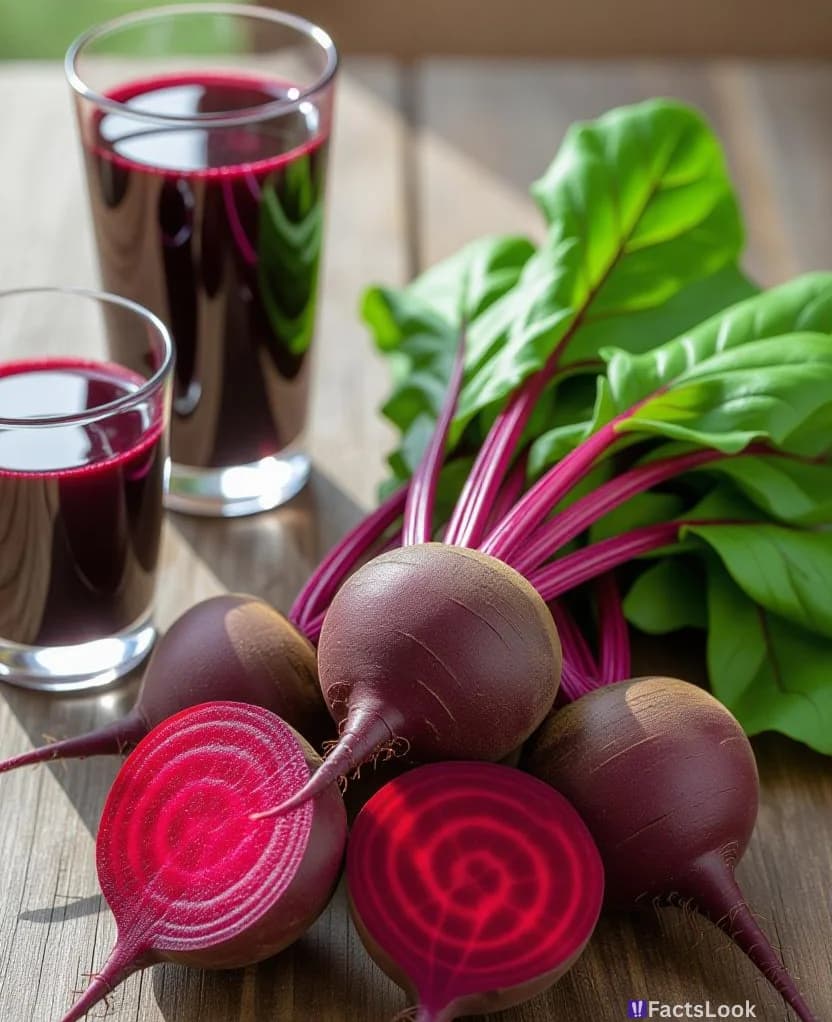
Beetroot's deep red pigment comes from betalains — and those same compounds that make borscht look so dramatic are powerful antioxidants that your body actually uses. This isn't just a vegetable that looks pretty on a plate. Research keeps uncovering reasons why this root deserves serious attention from anyone who eats plants. Whether you're a cyclist chasing better endurance, a curious eater hunting for real nutrition, or just someone who wants to understand what you're actually putting in your body — here's what the science says about Beta vulgaris.
The magic happens underground. One cup of cooked beetroot — roughly 170g — delivers about 58 calories, 13g of carbohydrates, 3g of fiber, and a nutritional profile that punches well above its weight class. You're getting potassium (which matters for nerve function and blood pressure regulation), manganese (important for bone health and metabolism), folate (critical for cell division and DNA synthesis), and vitamin C. The standout compound, though, is dietary nitrate — typically 250–450mg per cup of cooked beets, depending on soil conditions and variety. That's the molecule driving most of the health research.
What makes beetroot unusual is the combination of two distinct compound families working together. Nitrates convert to nitric oxide in your body, which relaxes and widens blood vessels. Betalains act as antioxidants with measurable effects on liver function and inflammation. Neither compound is unique to beetroot, but their concentration and the way they interact in whole-plant preparations makes beetroot a particularly efficient delivery system.
1. What Nitrates Actually Do for Athletic Performance
Athletes and sports scientists have been paying close attention to beetroot since roughly 2012, when several studies showed nitrate-rich beet juice could reduce the oxygen cost of exercise.
A 2024 Frontiers in Nutrition mini-review compared beetroot juice supplementation against nitrate salts for exercise performance. The findings suggest beetroot juice works — but not just because of nitrate. Other compounds in the whole-plant matrix appear to contribute to the effect, meaning whole-beetroot preparations may outperform isolated nitrate for some outcomes.
For endurance athletes, the practical implication: research suggests 300–500mg of nitrate (roughly 500ml of beetroot juice, or about two cups of cooked beets) taken 2–3 hours before exercise can improve time trial performance by 1–3%. That's not a massive margin, but in competitive contexts, it's measurable.
Related: If you're thinking about dietary changes for performance, it's worth knowing how stress physically reshapes the brain — and how nutrition interacts with recovery.
2. Blood Pressure and the Nitric Oxide Pathway
This is where the research is most consistent.
A systematic review in PubMed found that inorganic nitrate and beetroot juice supplementation significantly reduces blood pressure in adults. The authors noted the effect was dose-dependent and appeared across both healthy subjects and those with hypertension.
One of the larger randomized controlled trials cited gave 68 hypertensive patients nitrate-replete beetroot juice for four weeks. Systolic blood pressure dropped by a mean of 9.0 ± 7.8 mmHg — a clinically meaningful reduction for people managing hypertension.
How it works: dietary nitrate → gut bacteria convert to nitrite → nitrite converts to nitric oxide (NO) → NO relaxes smooth muscle in blood vessel walls → blood pressure drops.
That's the whole pathway. No magic, just chemistry.
Research suggests consuming around 300–500mg of nitrate daily (roughly one to two cups of cooked beetroot) over several weeks produces measurable blood pressure effects.
If you're exploring how dietary choices affect long-term health outcomes, the research on obesity's hidden impacts on the body provides useful context for understanding cardiovascular risk more broadly.
3. Brain Blood Flow in Older Adults — What's Real, What's Overhyped
Here's where the picture gets more nuanced.
In 2010, a Wake Forest team published the first study linking beet consumption to increased brain blood flow in older adults. They fed 14 adults aged 70+ a high-nitrate diet including 16 ounces of beet juice, then used MRI to measure cerebral blood flow. The result: increased perfusion to white matter in the frontal lobes — the areas associated with cognitive decline and dementia.
A follow-up Wake Forest study in 2017 tested beetroot juice combined with exercise in 26 sedentary hypertensive adults aged 55+. Participants who drank Beet-It containing 560mg of nitrate before 50-minute walks showed brain connectivity patterns resembling younger adults — compared to exercise alone.
However — and this matters — a 2022 study published in Nutrients found that 13 weeks of beetroot juice supplementation in overweight/obese older adults did not significantly alter cognitive function or cerebral blood flow. So the relationship may depend on baseline health, exercise context, and dosage.
The sleep science research on recurring dreams touches on similar questions about how lifestyle factors interact with cognitive health — both are areas where nutrition likely plays a supporting role rather than a standalone solution.
Bottom line: research suggests beetroot may support brain health through blood flow mechanisms, particularly when combined with physical activity. The evidence isn't settled enough to make strong claims, but the biology is plausible.
4. The Liver and Antioxidant Defense
Beetroot's betalains — betacyanin and betaxanthin — are distinctive red-purple pigments with documented antioxidant activity. Research suggests these compounds support liver function by increasing phase II detoxification enzyme activity. This is the body's way of processing and eliminating potentially harmful compounds.
A 2016 study in PLOS ONE found that beetroot extract protected rat liver tissue against oxidative damage. Human studies are less robust, but the mechanism is consistent with what we know about dietary antioxidants and hepatic health.
For practical purposes: betalains are somewhat heat-sensitive. Raw or lightly cooked beetroot preserves more of these compounds than prolonged high-heat preparation.
5. Fiber, Gut Health, and Digestion
A single cup of cooked beetroot contains about 3g of dietary fiber — not a huge amount, but meaningful in the context of most Western diets falling well below recommended intakes (25–38g/day).
Fiber supports regular bowel movements, feeds beneficial gut microbiota, and produces short-chain fatty acids like butyrate that research links to reduced inflammation and improved gut barrier function.
Beetroot also contains betaine (not to be confused with betalains), which supports liver function and may aid digestion by promoting stomach acid production.
For readers managing their dietary patterns more broadly, what the research says about vegan diets covers how plant-based eating intersects with nutrient absorption and digestive health.
6. Nitrates, Oral Microbiome, and Blood Pressure
A 2026 ScienceDaily report highlighted recent research suggesting beetroot juice may reshape oral bacteria in ways that reinforce blood pressure lowering effects. The nitrate-to-nitrite-to-nitric oxide conversion pathway depends partly on oral microbes — so the relationship between beetroot, mouth bacteria, and cardiovascular health is more complex than a simple supplement effect.
This is one reason whole-beetroot products may outperform isolated nitrate tablets in blood pressure studies.
7. Cooking and Culinary Uses That Preserve Nutrition
Beetroot is remarkably flexible in the kitchen.
- Roasting: Concentrates sugars and caramelizes flavor. Slightly reduces betalain content but retains most minerals and fiber.
- Raw: Grated into salads for maximum betalain retention. Has a more vegetal, earthy flavor.
- Pickling: Preserves beets for months and adds probiotic potential from the vinegar environment.
- Juicing: High nitrate delivery but strips fiber. The 2010 Wake Forest study used 16oz of juice as a single dose.
- Beet greens: Often discarded, but the leaves are rich in vitamin K, vitamin A, and iron. Entirely edible and nutritious.
Beetroot's pigment is a natural food dye — used historically and still valid for coloring cakes, pasta, and other foods without synthetic alternatives.
8. Historical and Cultural Significance
Beta vulgaris has been cultivated since at least 3000 BCE, originally for its medicinal leaves rather than the root we eat today. The Romans used beets medicinally; the ancient Greeks may have used them as an aphrodisiac (no strong evidence on that one, but it's part of the folklore).
Eastern European borscht — beet soup — became a cultural staple partly because beets store well in cold climates and provide dense nutrition during winter months. It's functional food disguised as comfort food.
9. Who Should Be Cautious
Beetroot contains oxalates, which can contribute to kidney stone formation in susceptible individuals. If you have a history of calcium oxalate stones, moderate intake rather than overloading.
Beeturia (red or pink urine after eating beets) is harmless — caused by betalain pigments exiting unchanged. It affects roughly 10–15% of people and is not a sign of any problem.
Beetroot's nitrates are generally beneficial, but people on blood pressure medication should check with a doctor before making major dietary changes, as combined effects could lower blood pressure more than expected.
10. Growing Your Own — Yes, It's Easy
Beets are one of the more forgiving vegetables for home gardeners. They tolerate cool temperatures (ideal soil temp: 50–65°F / 10–18°C), don't need massive amounts of space, and can be succession-planted for continuous harvest.
The whole plant is usable: roots for roasting or salads, greens for sautéing (they're related to chard and spinach). Nothing goes to waste.
For those growing in containers: a 12-inch pot works for 2–3 beet plants. Sandy loam soil with good drainage produces the most uniform roots.
Frequently Asked Questions
How much beetroot should I eat daily for health benefits?
Research suggesting blood pressure benefits typically used 300–500mg of dietary nitrate daily — roughly one to two cups of cooked beets, or 250–500ml of beetroot juice. The evidence for athletic performance uses similar or slightly higher doses, consumed 2–3 hours before exercise.
Can I take beetroot supplements instead of eating beets?
Whole-beetroot products (juice, powder) appear to work better than isolated nitrate tablets, likely because other compounds in the plant matrix contribute to the effects. If you supplement, look for products that include the whole plant, not just isolated nitrate.
Does cooking destroy the nutrients?
Betalains (antioxidant pigments) are somewhat heat-sensitive and degrade at high temperatures over extended cooking times. Short cooking methods — roasting at moderate temperatures, quick steaming — preserve more than prolonged boiling. Nitrates are relatively stable; losses come mainly from leaching into cooking water, so don't discard that water if you can use it.
Are there side effects?
Beeturia and harmless red/pink stool are common and not concerning. High oxalate content means caution for people prone to kidney stones. Very high nitrate doses are not recommended — the research uses moderate, food-based amounts.
What's the difference between red and golden beets?
Nutritionally similar, though red beets tend to have slightly higher betalain content. Golden beets won't stain your hands or clothes as aggressively — a practical consideration if you prep them frequently.
Should I worry about beetroot and blood pressure medication?
Possibly. Beetroot can meaningfully lower blood pressure. If you're on antihypertensive medication, talk to your doctor before making significant dietary changes — you don't want additive effects pushing readings too low.
Beetroot is a case study in why food science keeps finding interesting things in foods people have eaten for thousands of years. The nitrate pathway, the betalain antioxidant system, the fiber-gut connection — none of these are new. What's new is the precision with which researchers can measure what they're doing and to whom.
If you're curious about how nutrition intersects with other body systems, the science behind stress and brain changes might interest you. Or if you're thinking about dietary patterns more broadly, what the research actually says about vegan diets covers protein, iron, and common misconceptions.
Subscribe to our newsletter for a regular dose of fascinating facts! Know a fact we missed? Drop it in the comments with your source.